

Shelf Bracket Material Quality: How to Identify Good Steel and Avoid Hidden Quality Risks
When sourcing supermarket shelving, buyers often compare prices, dimensions, load capacity and appearance. However, one important factor can be overlooked: the quality and traceability of the steel used to manufacture shelf brackets.
Two shelf brackets may look similar in a quotation or product photograph, but differences in raw material quality, steel thickness, surface condition and manufacturing processes can affect their consistency, appearance and suitability for the intended application.
This guide explains how to evaluate shelf bracket material quality, recognize common steel surface defects, verify material traceability and understand the manufacturing quality considerations at Shanghai Xingye Shelf Co., Ltd.
Key Takeaway: How Can Buyers Identify Quality Steel Shelf Brackets?
To evaluate shelf bracket material quality, buyers should check six important factors:
- The specified steel grade and applicable material standard.
- The material certificate and original steel coil identification.
- Actual steel thickness and dimensional tolerances.
- Surface condition before stamping and powder coating.
- Stamping accuracy and consistency between components.
- Finished coating appearance and relevant quality test records.
A competitive quotation does not necessarily mean the same material specification or manufacturing standard. The most reliable comparison is based on verifiable material documents, actual samples and consistent production quality.
1. Why Shelf Bracket Material Quality Matters
Shelf brackets are important structural components of a gondola shelving system. They connect to the shelving uprights and support shelf panels and merchandise loads.
For this reason, material selection and manufacturing consistency should be considered together. A supplier's quotation may show a particular thickness or steel grade, but buyers should also verify whether the supplied material matches the agreed specification.
In price-sensitive markets, differences in raw material sourcing and production controls may contribute to different quotation levels. Some low-cost sourcing practices may involve downgraded steel, non-prime material or leftover pieces from other processing operations.
These categories should not be confused. Offcuts, for example, are not automatically defective. Their suitability depends on their condition, dimensions, traceability and compliance with the agreed technical requirements.
Buyers should pay particular attention to:
- Steel grade: Does the material match the grade specified in the quotation or purchase contract?
- Material thickness: Does the actual thickness meet the agreed requirement?
- Surface condition: Are there visible rolling marks, dents, scratches, rust or other irregularities?
- Traceability: Can the supplier identify the material batch or original steel coil?
- Manufacturing consistency: Are the stamped brackets uniform in shape and dimensions?
- Coating quality: Is the finished surface consistent, and can the supplier provide relevant inspection evidence?
Evaluating these details helps buyers understand the actual product behind a quotation instead of comparing unit prices alone.
2. Common Steel Surface Defects Found on Shelf Brackets
Steel surface condition is an important part of shelf bracket manufacturing. Some irregularities may originate from the incoming steel, while others may be introduced during leveling, stamping, cleaning or surface finishing.
2.1 Horizontal Rolling Marks and Uneven Surface Texture
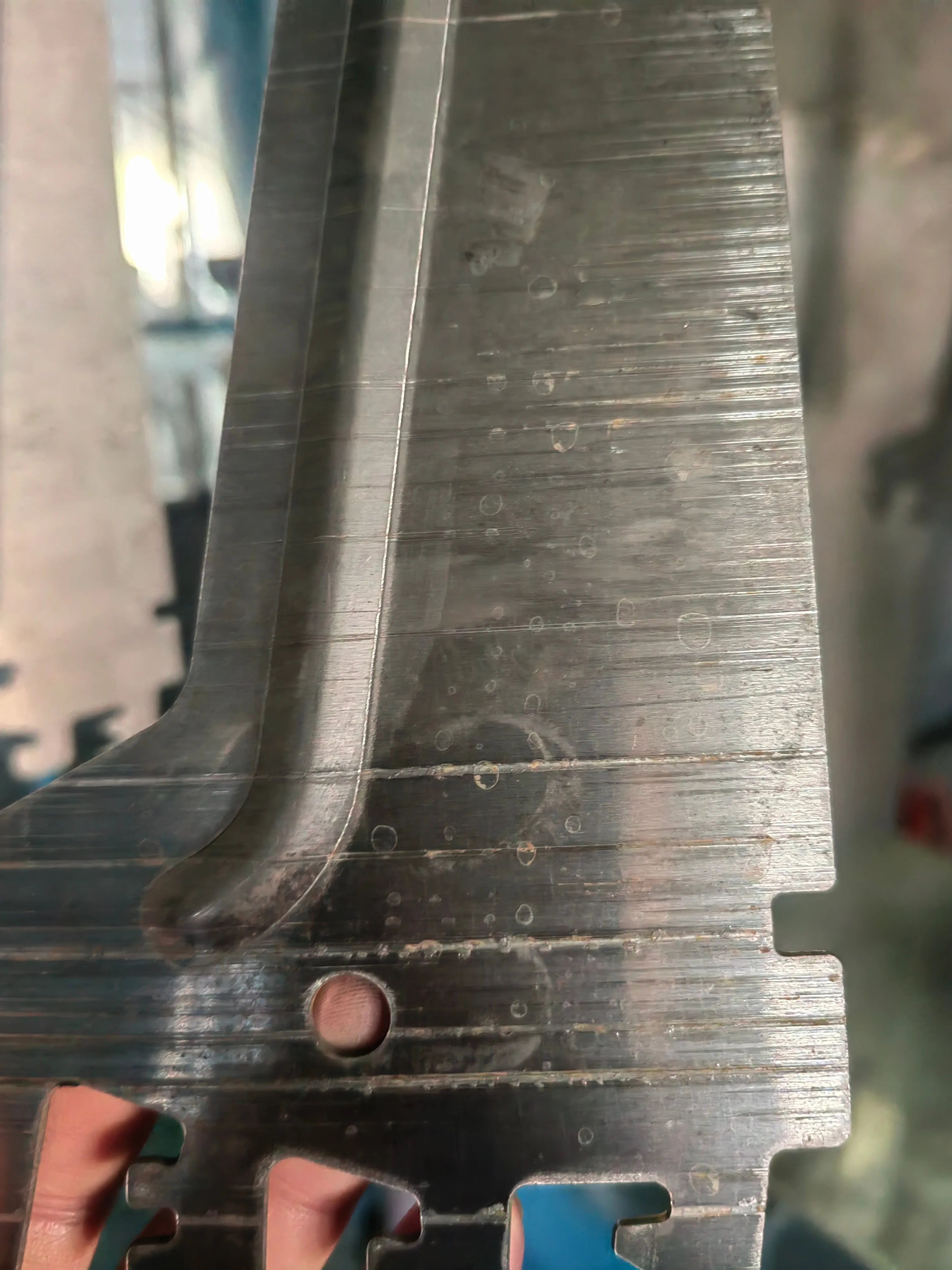
Closely spaced horizontal lines or ridges can sometimes be observed on stamped steel components. Depending on their appearance and production history, possible causes may include steel surface irregularities, leveling roller marks, equipment vibration or other processing conditions.
These marks should be inspected before the next production stage. If they are deep or continuous, they may remain visible after powder coating.
However, photographs alone cannot determine whether the defect originated at the steel mill, during coil leveling or during subsequent processing. A reliable investigation should examine the original coil, production records and affected components.
2.2 Why Powder Coating Cannot Repair Deep Surface Defects
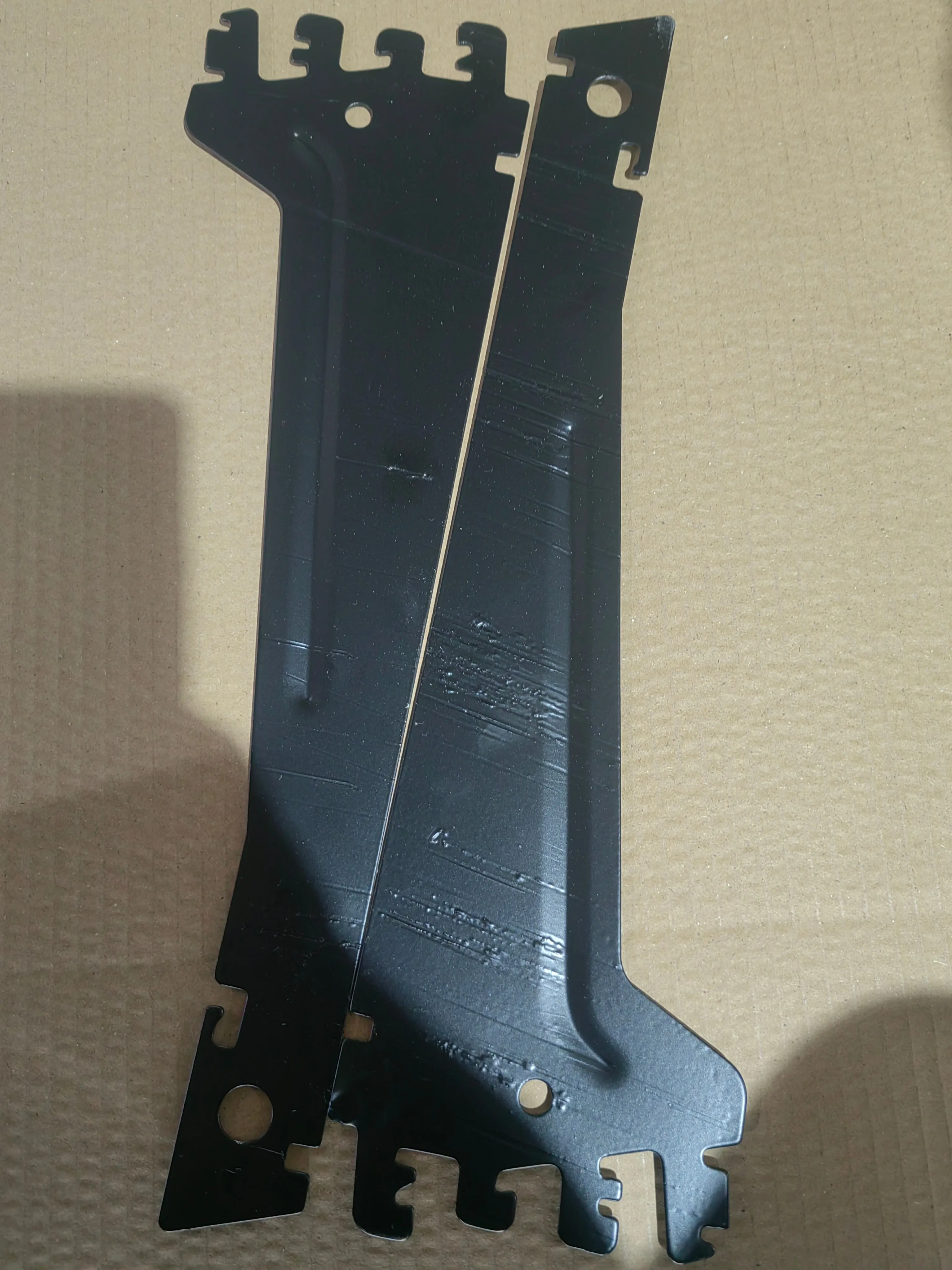
Powder coating is primarily used to provide color, surface protection and a consistent finish. It is not a repair process for deep mechanical marks, dents or significant unevenness in the steel substrate.
When light reflects across the finished component, underlying ridges and depressions may still be visible. In some cases, the contrast created by the coating can make the surface irregularities easier to notice.
For retail shelving projects, visible surface defects can affect the overall appearance of installed shelving, especially when multiple brackets are positioned next to one another.
2.3 Batch-Related Surface Irregularities
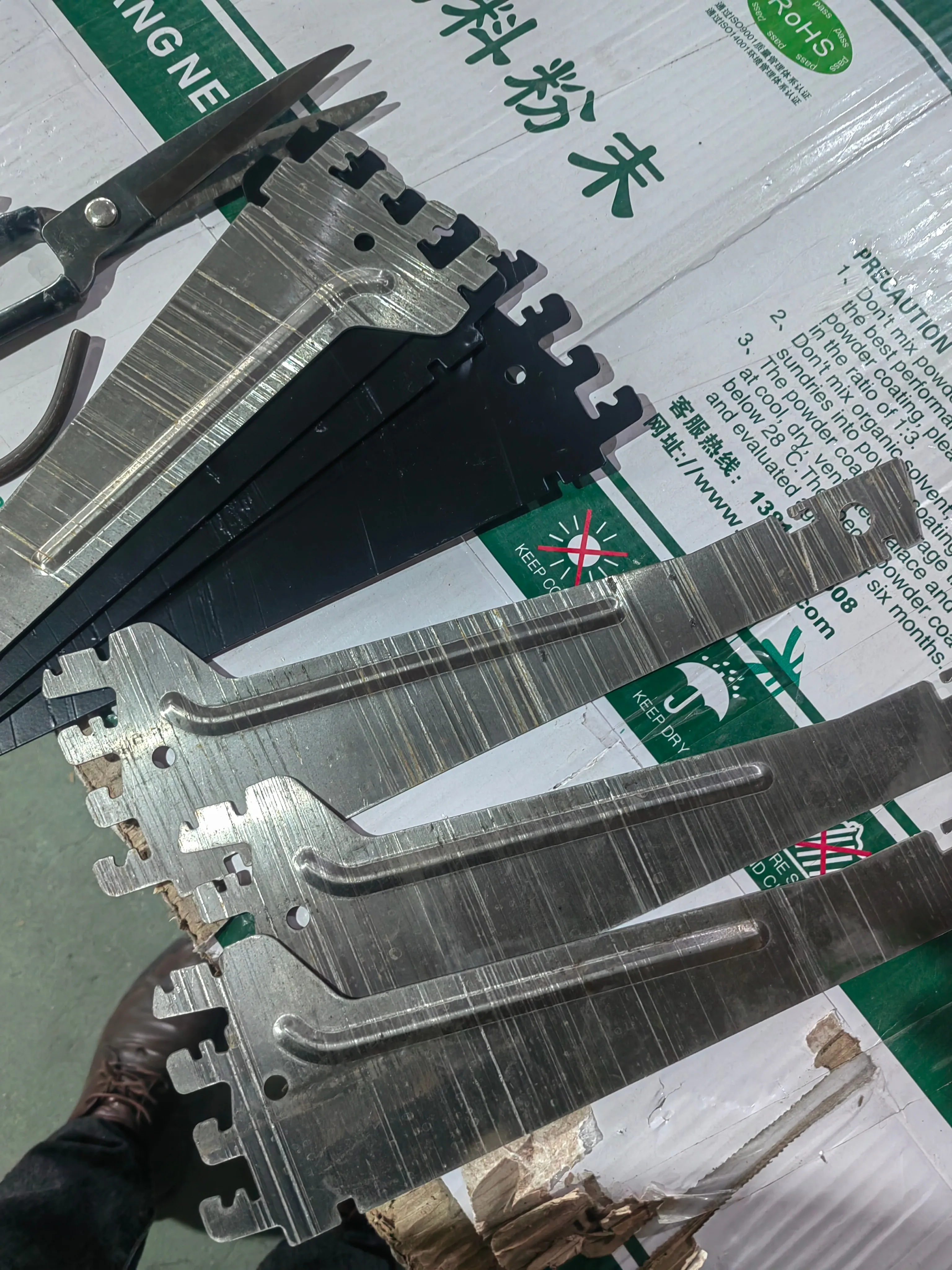
When similar surface marks appear on multiple components, buyers should ask the supplier to investigate whether the affected parts came from the same steel batch or production run.
Checking incoming material and stamped components before coating can help identify problems earlier and reduce the risk of processing a larger quantity of inconsistent products.
2.4 Water Spots, Oil Residues and Pretreatment Conditions
Localized circular marks, water-like spots or stains may also be visible on uncoated metal components.
Possible causes include incomplete cleaning, residual processing oil, water deposits or drying conditions during surface pretreatment. The exact source depends on the production process and should be confirmed through inspection.
Before powder coating, metal components should be properly cleaned and prepared according to the coating process requirements. Poor surface preparation can affect coating appearance and may compromise adhesion.
3. Prime-Grade Steel, Material Specifications and Traceability
Steel grade is an important part of material selection, but the grade name alone does not establish whether a particular batch is suitable for shelf bracket production.
Buyers should verify the material designation, applicable standard, actual dimensions, surface condition and supporting documentation.
3.1 Understanding Prime-Grade and Downgraded Steel
In steel procurement, prime-grade material generally refers to material supplied as first-quality production material and meeting the agreed product specification.
Buyers should distinguish between the following terms:
- Prime-grade steel: Material supplied as first-quality material under the relevant specification, supported by appropriate documentation.
- Downgraded or secondary-quality steel: Material sold under a lower quality classification or with deviations from the original specification.
- Steel offcuts: Remaining pieces from cutting or processing. Their suitability depends on dimensions, condition, traceability and compliance with the agreed requirements.
- Scrap steel: Material classified as scrap. It should not be assumed to meet the requirements for structural shelving components.
The important issue is not simply what a supplier calls the material. It is whether the material used in production matches the agreed grade, thickness and technical requirements.
3.2 Steel Coil Identification and Material Traceability
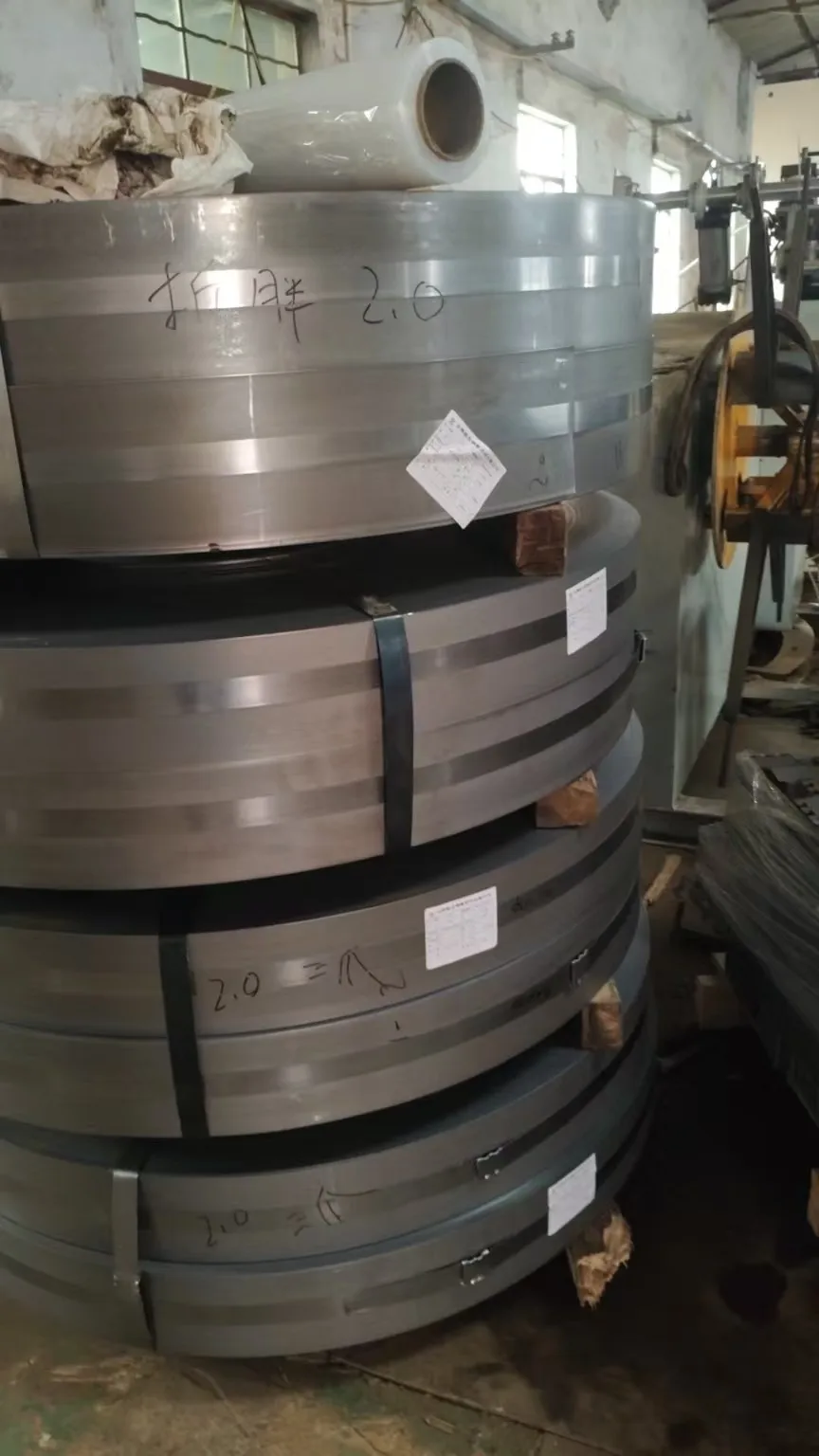
Material management begins before stamping. Steel coils should be identified and managed according to their specifications and production batches.
Clear identification helps manufacturers organize incoming materials and provides information that can be used when checking the source of a production batch.
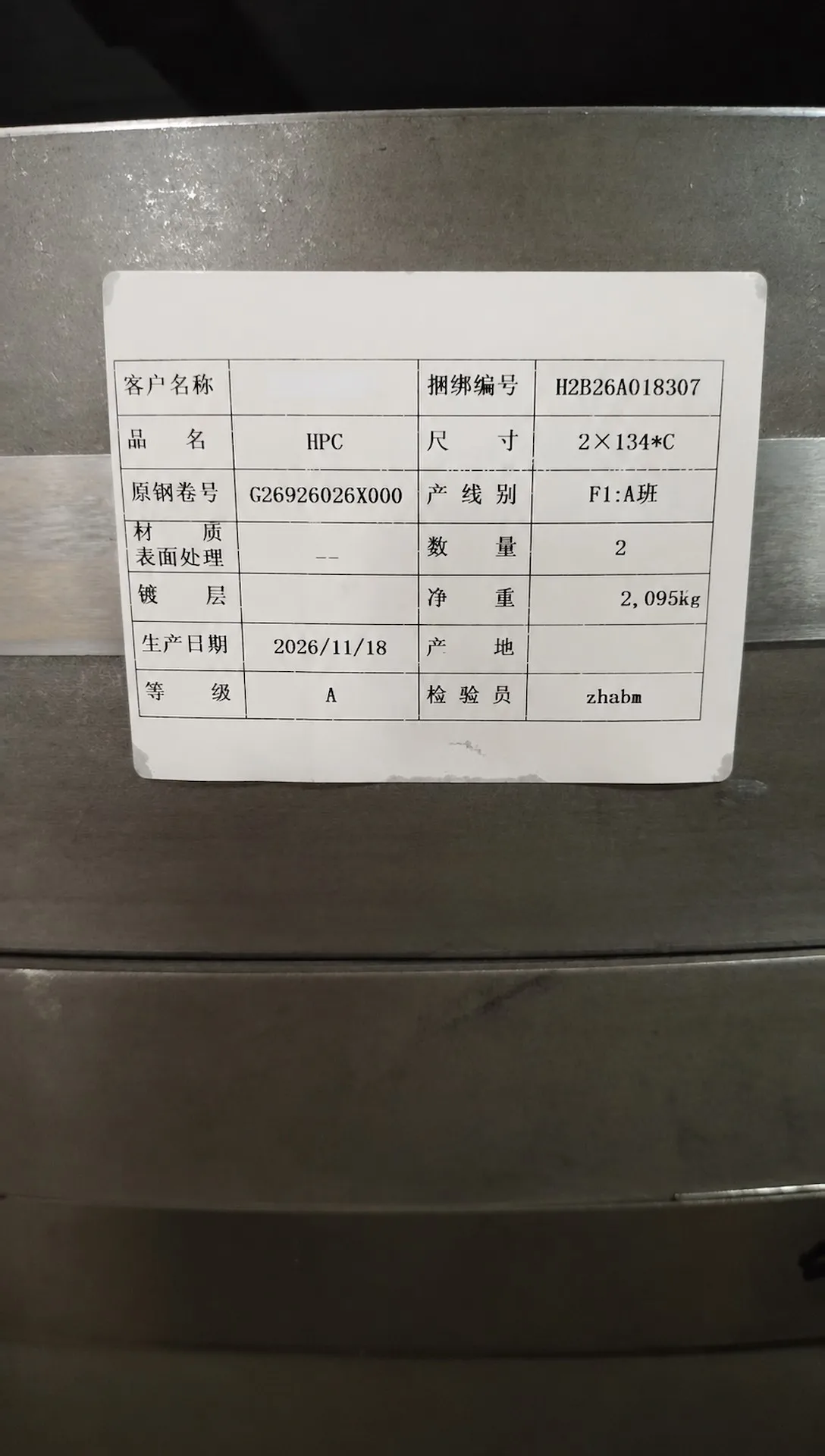
The photographed steel coil label contains the following information:
- Material designation: SPHC
- Grade marking: A
- Material size: 2 × 134 mm
- Original coil number: G26926026X000
- Net weight: 2,095 kg
This information provides a starting point for material identification and traceability. For full verification, buyers should request the corresponding material certificate or mill test certificate and confirm that the grade, dimensions and coil identification match the supplied material.
4. How XINGYE Controls Shelf Bracket Material and Production Quality
At Shanghai Xingye Shelf Co., Ltd., material selection and manufacturing consistency are important parts of our shelf production process.
As a direct manufacturer of supermarket shelving and retail display systems, we pay attention to material specifications, incoming material condition, stamping consistency and finished surface quality.
4.1 Incoming Material and Stamping Quality
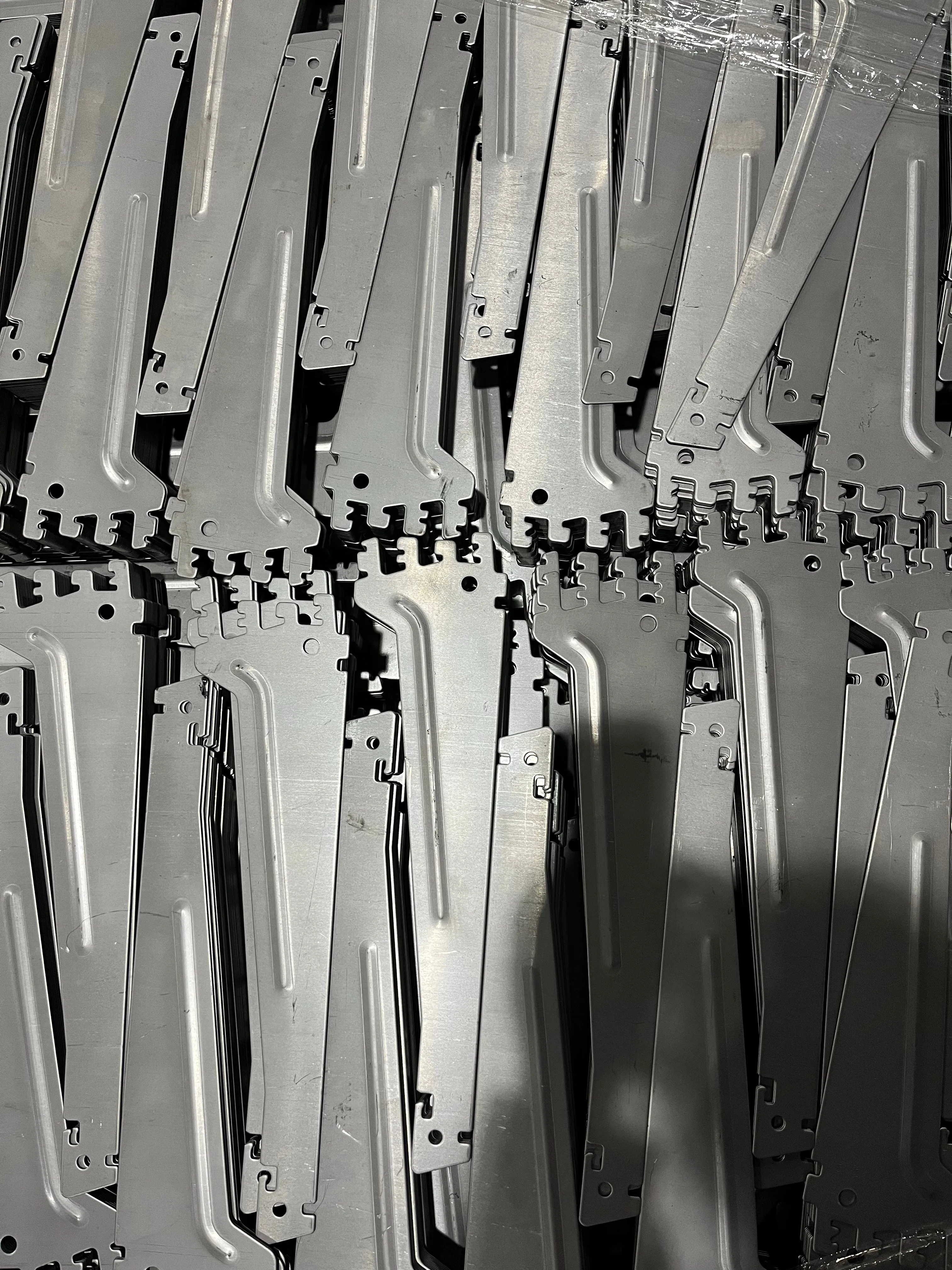
The photographed components show relatively uniform visible surfaces, regular hook features and consistent stamped shapes.
Checking incoming material and stamped components helps identify visible surface or dimensional problems before the next manufacturing stage.
4.2 Surface Quality and Formed Reinforcement Ribs
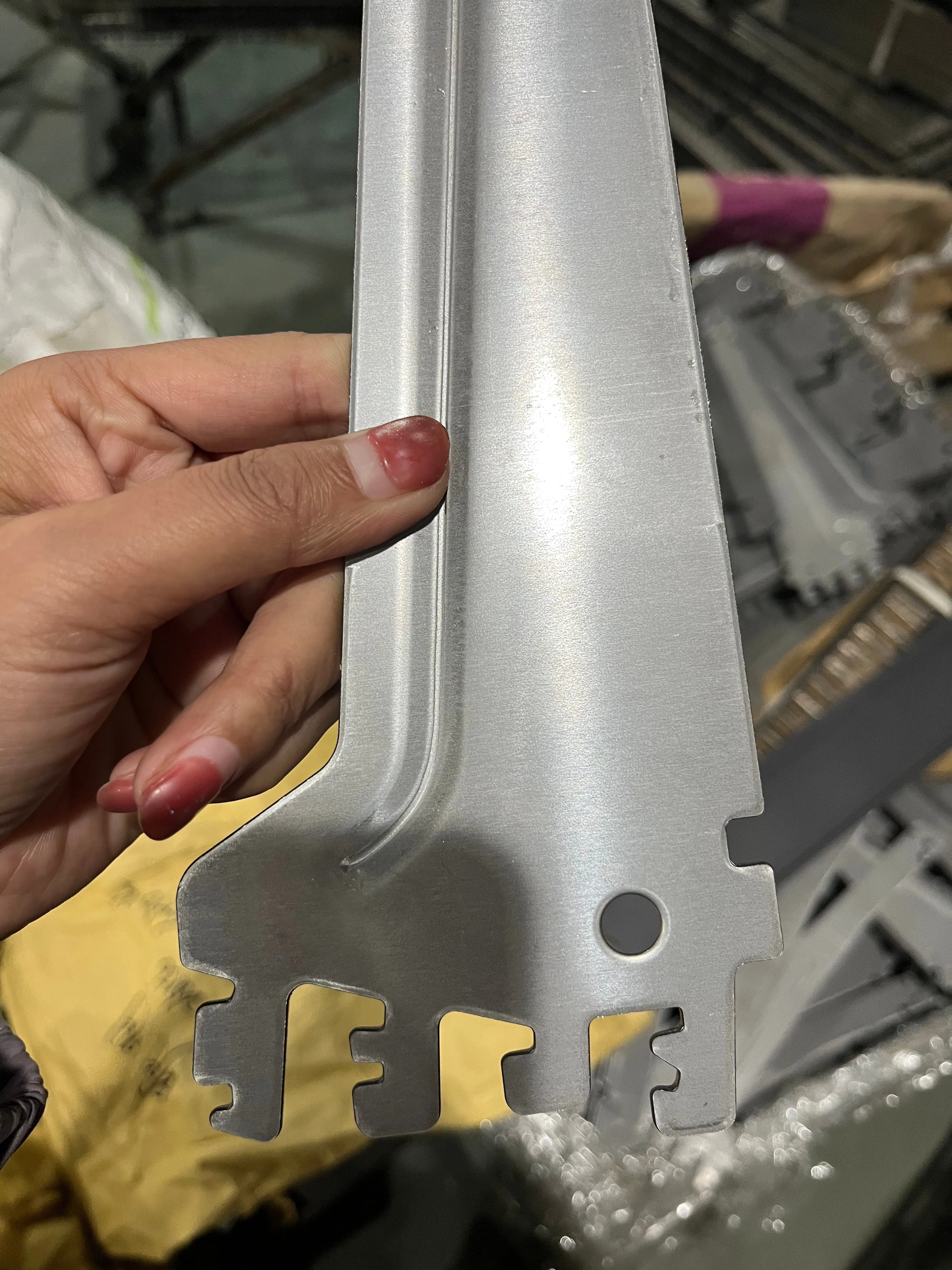
The bracket surface and reinforcement features should be evaluated together. Consistent forming helps maintain the intended component shape and compatibility with the corresponding shelving uprights.
4.3 Consistency Between Left and Right Brackets
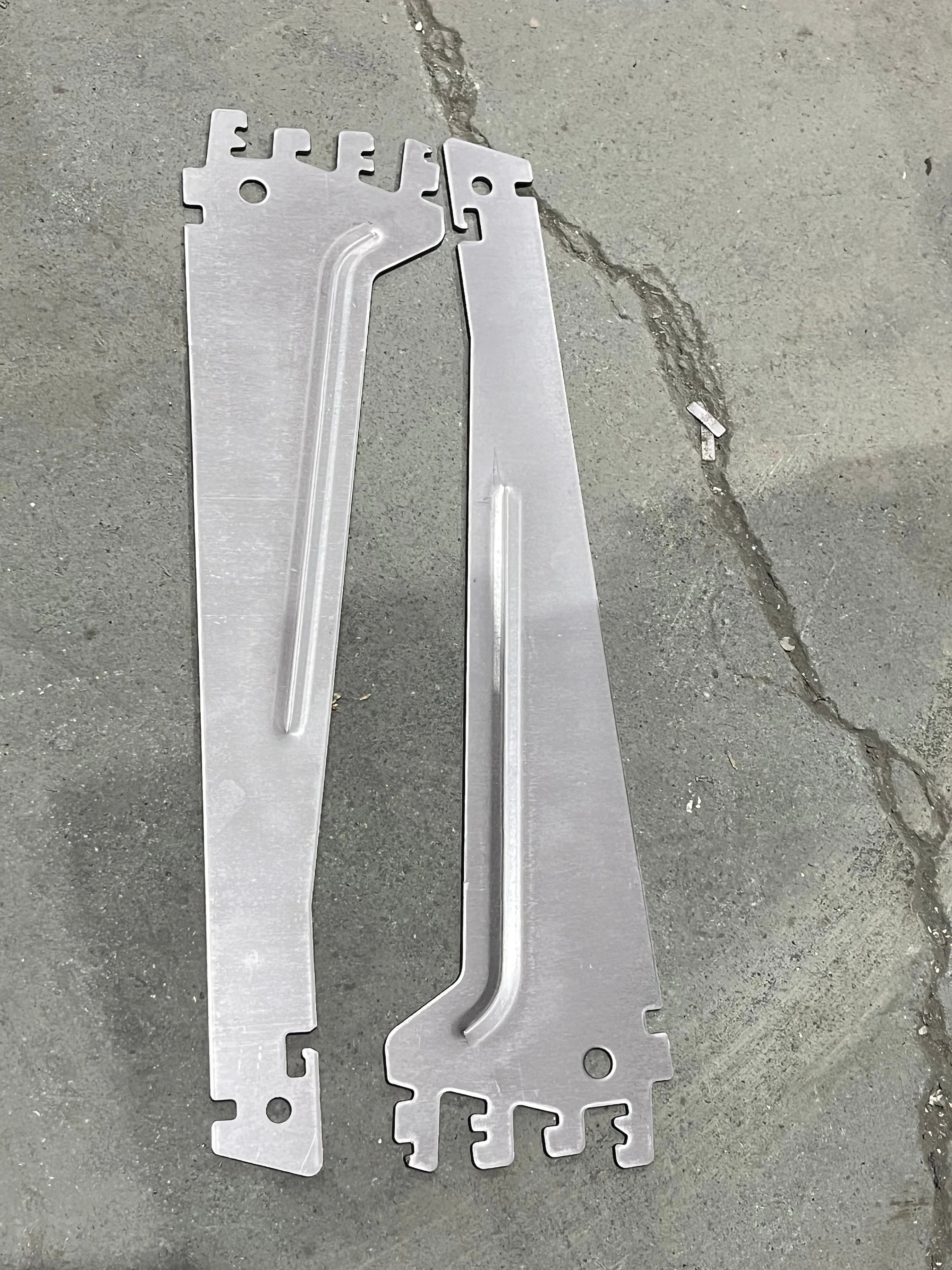
Left and right brackets should have matching profiles and compatible hook dimensions. Dimensional inspection and appropriate tooling maintenance help maintain consistency across production batches.
4.4 Finished Powder-Coated Shelf Brackets
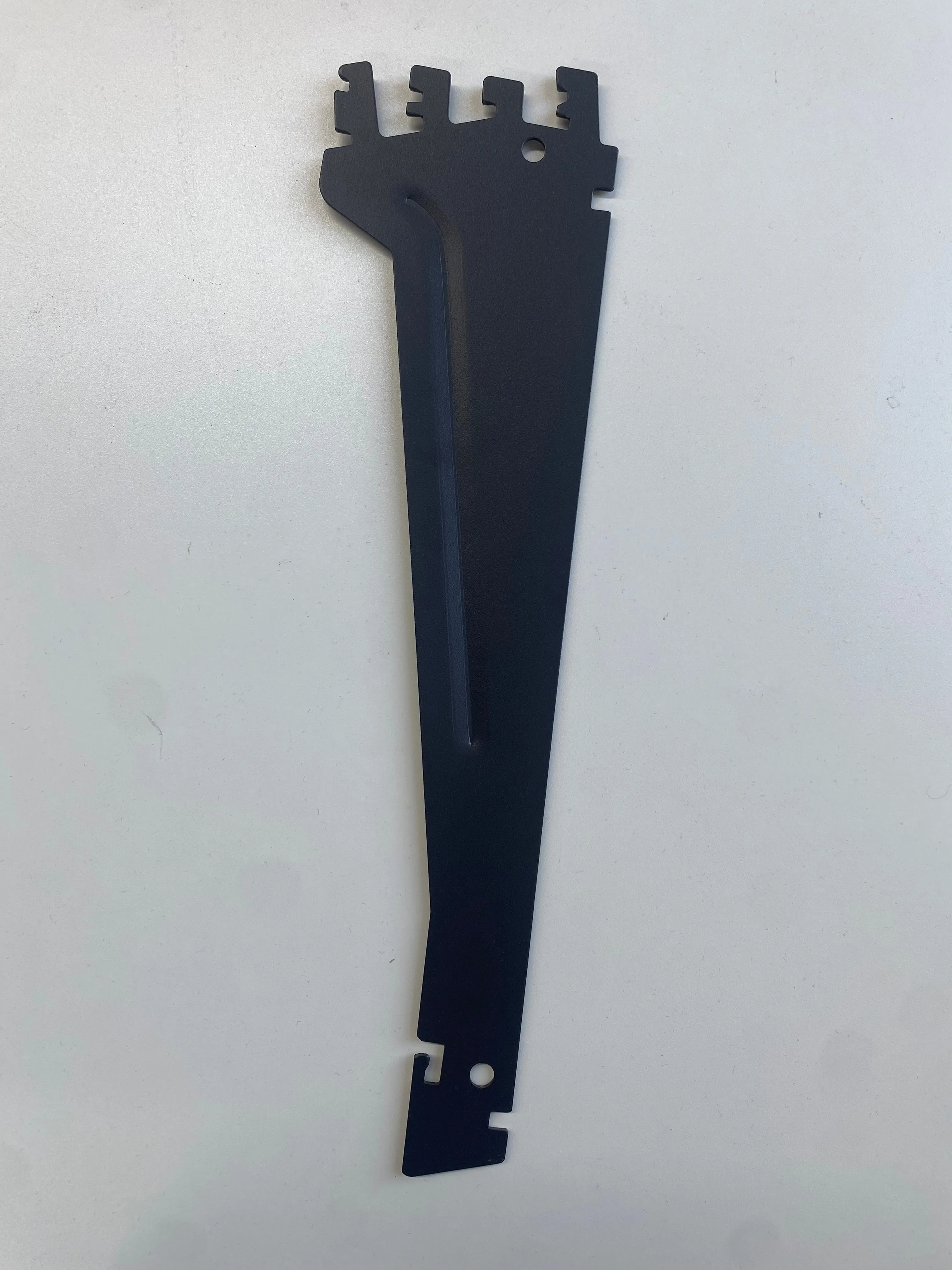
Surface pretreatment and powder coating are important steps in the finishing process. Proper cleaning, pretreatment, drying and coating control help support coating appearance and adhesion.
A smooth-looking finished surface is one visible quality indicator. However, coating performance should also be checked through suitable inspection and testing. Buyers requiring specific coating performance should request the relevant test method, report and product scope.
5. SPHC vs. Q235B: What Should Buyers Check?
SPHC and Q235B are different steel designations used under different material standards. They should not be treated as interchangeable grades simply because both may be used in steel fabrication.
| Comparison Item | SPHC | Q235B |
|---|---|---|
| Applicable Standard | JIS G 3131 | GB/T 700 |
| Material Classification | Hot-rolled mild steel designation | Structural carbon steel grade |
| Mechanical Properties | Check the applicable standard and material certificate for specified properties. | Check the applicable thickness range and material certificate. |
| Buyer Verification | Confirm grade, dimensions and certificate details. | Confirm grade, dimensions and certificate details. |
For shelf bracket applications, the appropriate material depends on the component design, forming requirements, thickness, intended load and engineering specification.
Buyers should not select a bracket based on the steel grade name alone. Ask the supplier to provide the material certificate and confirm that the delivered material matches the agreed requirements.
6. How to Verify a Shelf Bracket Supplier: A Buyer Checklist
Before placing an order, international buyers can use the following checklist to evaluate a shelving supplier's material and production controls.
- Confirm the steel grade: Ask for the exact material designation and applicable standard.
- Request material documentation: Check the material certificate or mill test certificate.
- Verify coil identification: Compare the original coil number with the supporting documentation where available.
- Measure actual thickness: Use a suitable measuring instrument and confirm the agreed tolerance.
- Inspect the raw material surface: Look for visible dents, ridges, scratches, rust and other irregularities.
- Inspect stamped components: Check the shape, reinforcement ribs, edges and hook dimensions.
- Compare batch consistency: Inspect multiple samples rather than relying on one selected component.
- Check the coating process: Ask about pretreatment, coating specifications and relevant test reports.
- Request production evidence: Review actual workshop photographs, inspection records and sample products.
A professional shelving manufacturer should be able to explain its material requirements, production controls and quality inspection procedures.
7. Why Choose Shanghai Xingye Shelf Co., Ltd.?
Founded in 1996, Shanghai Xingye Shelf Co., Ltd. is a direct manufacturer of supermarket shelving and retail display systems in China.
Our manufacturing and export experience includes:
- More than 30 years of manufacturing experience.
- 29,800+ square meters of manufacturing facilities.
- 16+ automated production lines.
- Products exported to more than 80 countries.
- OEM and ODM manufacturing support.
- CAD drawings and 3D store layout support for suitable projects.
Our product range includes:
- Gondola Shelving Systems
- Retail Display Shelving
- Checkout Counters
- Storage Shelving
- Shelving Accessories
We understand that international buyers need more than a competitive quotation. They also need consistent product specifications, clear communication, dependable production and quality information that can be checked.
Frequently Asked Questions
1. Why is steel material quality important for shelf brackets?
Steel material quality affects whether a bracket meets its agreed specifications and manufacturing requirements. Material grade, thickness, surface condition and traceability should all be checked when evaluating a supplier.
2. Can powder coating hide steel surface defects?
Powder coating provides color and surface protection, but it cannot reliably remove deep mechanical marks, dents or unevenness in the steel substrate. Some defects may remain visible after coating.
3. What is the difference between prime-grade steel and steel offcuts?
Prime-grade steel is supplied as first-quality material under an agreed specification. Steel offcuts are remaining pieces from cutting or processing. Offcuts are not automatically defective, but their dimensions, condition and traceability must be verified before use.
4. How can buyers verify the steel used by a shelving manufacturer?
Request the material certificate or mill test certificate, check the steel grade and thickness, compare the coil identification number with the documentation, and inspect the actual components.
5. Is SPHC the same as Q235B?
No. SPHC and Q235B are designations under different material standards. Buyers should compare their documented specifications and confirm suitability for the intended component rather than treating the grades as equivalent.
6. What should buyers inspect before approving a shelf bracket sample?
Check the material thickness, surface condition, stamped shape, hook dimensions, reinforcement features, coating appearance and compatibility with the shelving upright. For important projects, request relevant inspection and test records.
7. Why should buyers request a steel material certificate?
A material certificate provides information about the steel grade and documented properties of the supplied material. Buyers can use it to compare the material with the agreed specification and, where available, the original coil identification.
8. Does a smooth powder-coated surface prove the steel is high quality?
No. A smooth appearance is useful for evaluating the visible finish, but it does not independently prove steel grade, mechanical properties or load capacity. Material documentation and appropriate product testing are also important.
Product specifications, material requirements and quotations are subject to confirmation based on the final project details and agreed technical documents.