

Well-organized supermarket shelves make shopping easier, improve product visibility, and help customers find what they need without wasting time. A clear shelf organization system also helps store staff replenish products, maintain displays, and manage inventory more efficiently.
To organize supermarket shelves effectively, retailers should group products logically, use shelf height strategically, create a consistent planogram, maintain clear aisle signage, and select shelving systems that fit their products and store layout.
- Group products by category and customer shopping habits.
- Use eye-level, reach-level, and lower shelf zones strategically.
- Follow a consistent planogram to maintain product placement.
- Keep aisles clear and use visible category signs.
- Maintain full, neat, and properly faced shelves.
- Choose adjustable supermarket shelving that suits product sizes and display requirements.
1. Group Products by Category and Customer Shopping Habits
The first step in learning how to organize supermarket shelves is to create clear product categories. Customers should be able to understand where products are located without searching through unrelated items.
Arrange products into logical groups based on their type, purpose, and how customers typically shop. For example:
- Beverages: bottled water, soft drinks, juices, tea, and coffee.
- Breakfast foods: cereals, oats, spreads, and breakfast snacks.
- Packaged foods: pasta, rice, canned foods, and cooking ingredients.
- Personal care: shampoo, toothpaste, skincare, and hygiene products.
- Household products: detergents, cleaning supplies, and paper products.
Keep related products close to each other where it makes sense for the shopping journey. For example, pasta can be displayed near pasta sauces, while coffee filters can be placed near coffee products.
A consistent category structure helps customers navigate the store and makes replenishment easier for employees.
2. Use Shelf Height Zones Strategically
Shelf height affects product visibility, accessibility, and the overall shopping experience. Retailers should consider product size, weight, customer reach, and purchasing behavior when deciding where to place items.
| Shelf Zone | Typical Use | Organization Considerations |
|---|---|---|
| Top shelf | Lightweight products, larger packages, or less frequently purchased items | Keep products visible and avoid placing heavy items where they are difficult to reach. |
| Eye-level shelf | Products that need strong visibility | Use this area for important product ranges, selected promotions, or priority items. |
| Reach-level shelf | Frequently purchased everyday products | Make commonly selected items easy for customers to access. |
| Bottom shelf | Heavy products, bulk packages, or larger items | Consider product weight, safe handling, and convenient access. |
These zones are general merchandising guidelines rather than fixed rules. The best arrangement depends on the product category, target customers, packaging, and store requirements.
3. Create a Planogram for Consistent Product Placement
A planogram is a visual diagram that shows where products should be placed on supermarket shelves. It helps retailers organize product categories, shelf positions, and the amount of display space assigned to each item.
Using a planogram can help a supermarket:
- Maintain consistent product placement across different store locations.
- Allocate shelf space according to product range and sales requirements.
- Reduce confusion when employees replenish shelves.
- Improve product visibility and category organization.
- Make it easier to review and update store displays.
When creating a planogram, consider product dimensions, package visibility, shelf depth, shelf height, and the number of product facings required.
For supermarkets with multiple branches, a standardized planogram can also help maintain a consistent shopping experience across stores.
4. Plan Aisles and Sightlines for Easy Navigation
Good shelf organization is not only about where products sit on each shelf. The overall store layout also affects how customers move through the supermarket and find different departments.
When planning aisles and product displays, consider the following:
- Keep aisles accessible: allow customers to move comfortably with shopping carts and baskets.
- Use clear category signs: make major departments easy to identify from a distance.
- Maintain clear sightlines: avoid unnecessary visual obstructions at key points in the store.
- Arrange related departments logically: make it convenient for customers to move between complementary product categories.
- Keep entrances and checkout areas clear: avoid creating unnecessary congestion.
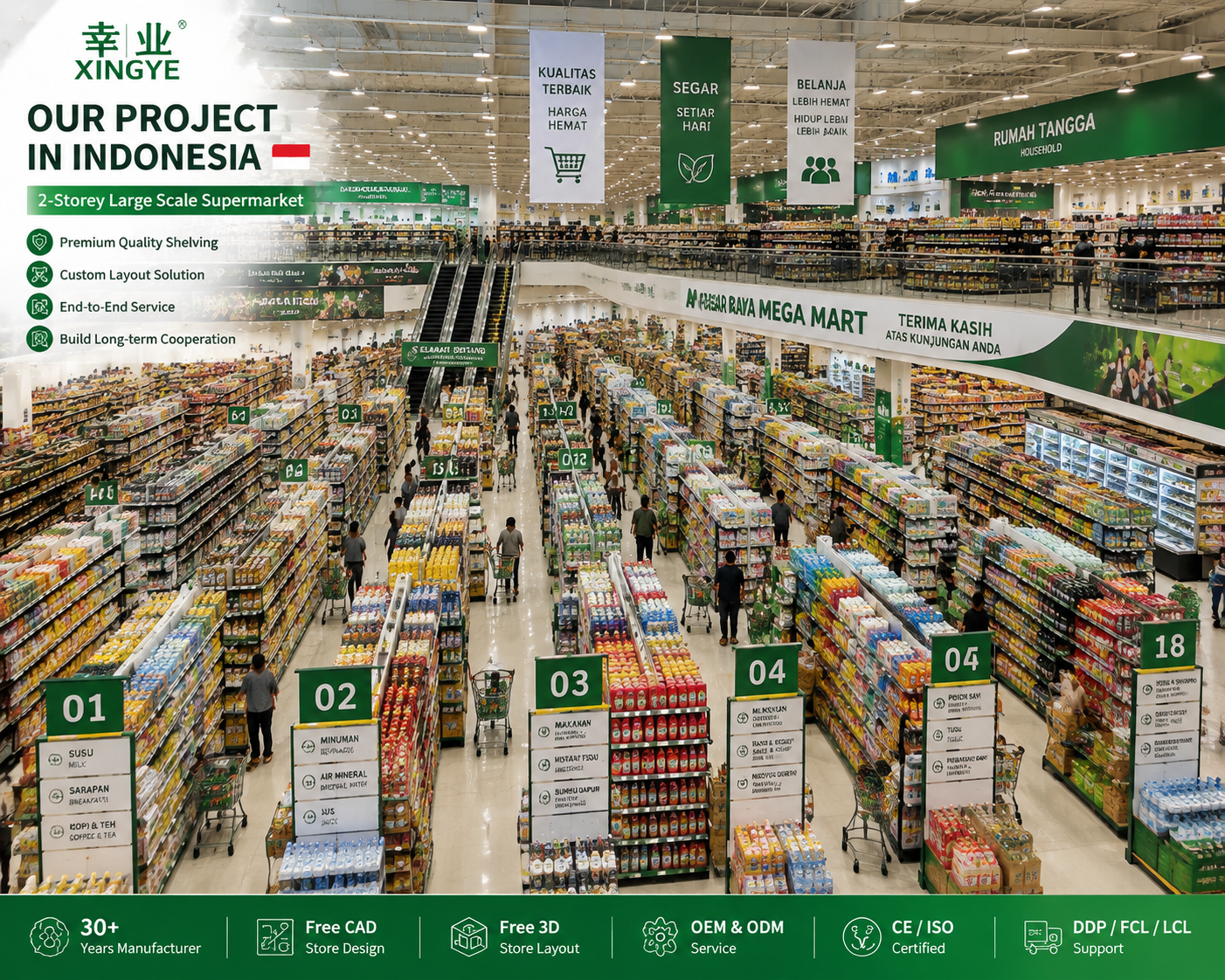
A well-planned supermarket layout combines suitable shelving, clear aisle signage, organized product categories, and convenient customer routes. The following XINGYE project in Indonesia illustrates a large-scale supermarket layout using organized shelving and clearly identified product areas.
5. Use Shelf Labels and Category Signs
Clear shelf labels and category signs help customers identify products, compare options, and understand where different items are located.
Effective supermarket signage should be easy to read, consistent, and positioned where customers can see it without difficulty.
Useful types of supermarket signage
- Department signs: identify major areas such as beverages, snacks, dairy, and household products.
- Shelf-edge labels: display product names, prices, and other relevant information.
- Promotional signs: highlight discounts, special offers, or seasonal products.
- Directional signs: help customers locate departments and store facilities.
Keep label formats consistent throughout the store. Make sure prices and product information match the items directly above or below each label.
6. Maintain Full, Neat, and Well-Faced Shelves
Even a well-designed supermarket layout can become difficult to navigate if shelves are messy, products are misplaced, or empty spaces are left unattended.
Regular shelf maintenance helps preserve the store's appearance and makes products easier to find.
Good shelf maintenance practices include:
- Place products with their front labels facing customers.
- Keep products within their assigned categories and shelf sections.
- Replenish popular products when stock is available.
- Remove damaged or unsuitable packaging from display areas.
- Check price labels and promotional information regularly.
- Follow the store's stock rotation procedures, including FIFO where appropriate.
Employees should also check shelf conditions during routine store inspections. A consistent maintenance process helps prevent product misplacement and keeps displays organized throughout the day.
7. Choose Supermarket Shelving That Supports Your Organization Plan
The right shelving system provides the physical structure needed to keep supermarket products organized. Different product categories may require different shelf sizes, configurations, and accessories.
When selecting supermarket shelving, retailers should consider the following factors:
Adjustable shelf levels
Adjustable shelves make it easier to accommodate products of different heights, from small packaged goods to larger household products.
Suitable load capacity
Each shelf should be selected and used according to its specified load capacity. Retailers should confirm product weight requirements with the shelving manufacturer before finalizing the configuration.
Modular configurations
Modular gondola shelving can support different aisle arrangements and store layouts. Retailers can plan shelving configurations according to available floor space and product categories.
Compatible accessories
Accessories such as dividers, hooks, price holders, and wire baskets can help organize specific product types and improve display flexibility.
Surface finish and durability
For everyday retail environments, shelving should have a suitable surface finish and construction for the intended application. Retailers should review material specifications and finish requirements when comparing suppliers.
Choosing shelving based on actual store requirements helps create a more practical and maintainable display system.
8. Common Mistakes to Avoid When Organizing Supermarket Shelves
Some common shelf organization problems can make shopping less convenient and create additional work for store employees.
- Mixing unrelated products: customers may struggle to identify the correct category.
- Ignoring shelf height: products may become difficult to see or reach.
- Using inconsistent product placement: customers and employees may find it harder to locate items.
- Blocking aisles: poor layout planning can reduce accessibility and create congestion.
- Using unclear shelf labels: incorrect or difficult-to-read labels can cause confusion.
- Neglecting shelf maintenance: misplaced products and empty spaces can make displays look disorganized.
- Choosing unsuitable shelving: shelving that does not fit product dimensions or store requirements can limit display efficiency.
Reviewing these issues regularly can help retailers maintain a more organized supermarket environment.
9. Quick Checklist for Organizing Supermarket Shelves
Use this checklist when setting up a new supermarket display or reviewing an existing store layout.
- Products are grouped into clear categories.
- Related products are placed near each other where appropriate.
- Shelf heights match product dimensions and customer access needs.
- A planogram or consistent product placement system is in place.
- Aisles are accessible and easy to navigate.
- Department signs and shelf labels are clear and accurate.
- Products are properly faced and replenished.
- Shelf load requirements are considered.
- Shelving accessories are suitable for the products displayed.
- Employees follow a regular shelf inspection and maintenance routine.
10. How XINGYE Supports Supermarket Shelving Projects
Shanghai Xingye Shelf Co., Ltd. is a supermarket shelving manufacturer established in 1996. The company provides retail shelving products and shelving solutions for supermarkets, convenience stores, pharmacies, and other retail environments.
With manufacturing operations in Changshu, China, XINGYE supports customers with shelving products and store display configurations for different retail project requirements.
XINGYE's product range includes:
- Gondola Shelving Systems
- Retail Display Shelving
- Checkout Counters
- Storage Shelving
- Shelving Accessories
For supermarket and retail projects, XINGYE can support customers with:
- CAD drawings and 3D store layout support.
- OEM and ODM services.
- Shelving configuration discussions based on store layouts and product requirements.
- Factory-direct manufacturing and export support.
XINGYE has exported products to more than 80 countries. Its management systems include ISO 9001, ISO 14001, and ISO 45001 certifications. CE and RoHS documentation is available for applicable selected products.
To learn more about the company and its manufacturing capabilities, visit the XINGYE company profile or explore its supermarket shelving products.
Frequently Asked Questions
1. What is the best way to organize supermarket shelves?
The best approach is to group products by category, use shelf height strategically, follow a consistent planogram, provide clear signage, and maintain neat product displays.
2. Why is shelf organization important in a supermarket?
Organized shelves help customers find products more easily, improve product visibility, support efficient replenishment, and create a more convenient shopping experience.
3. What products should be placed at eye level?
Eye-level shelves are commonly used for products that need strong visibility, including selected popular products, priority ranges, and promotional items. The final placement should reflect the retailer's merchandising strategy.
4. What is a supermarket planogram?
A planogram is a visual guide showing where products should be placed on shelves. It helps retailers manage product categories, shelf space, and consistent product positioning.
5. How often should supermarket shelves be reorganized?
Routine shelf checks should be carried out regularly. Larger changes may be needed when product ranges, promotions, seasonal demand, or store layouts change.
6. How can supermarkets make shelves easier to navigate?
Supermarkets can use clear product categories, visible department signs, consistent shelf labels, logical aisle arrangements, and unobstructed customer routes.
7. What type of shelving is suitable for supermarkets?
Gondola shelving is commonly used for supermarket aisles and wall displays. The appropriate configuration depends on store dimensions, product sizes, display requirements, and specified load capacity.
8. What should retailers consider when buying supermarket shelving?
Retailers should consider shelving dimensions, material specifications, load capacity, adjustable shelf levels, accessories, surface finish, store layout, and the manufacturer's project support.
Conclusion
Organizing supermarket shelves effectively requires more than simply placing products on display. Retailers need a clear category structure, suitable shelf heights, consistent product positioning, accessible aisles, accurate signage, and regular maintenance.
By combining a practical merchandising plan with suitable supermarket shelving, retailers can create a more organized store environment that supports both customers and employees.
Planning a Supermarket Shelving Project?
Shanghai Xingye Shelf Co., Ltd. can help you explore shelving configurations for your supermarket or retail store. Share your store layout, product categories, required dimensions, estimated quantities, and destination country so our team can better understand your project.
Product configurations, dimensions, load capacities, finishes, and project details are subject to confirmation based on the specific requirements and approved technical specifications of each order.