

How We Inspect Warehouse Shelving Before Shipment: Dimensions, Steel Thickness & Packaging Optimization
When purchasing warehouse shelving from overseas, buyers need more than a competitive quotation and a product photo. They need confidence that finished racks have been assembled for inspection, that key dimensions and steel thicknesses have been checked, and that potential discrepancies can be identified before shipment.
Shanghai Xingye Shelf Co., Ltd. supports pre-shipment quality checks for warehouse shelving. Inspection activities can include assembling finished shelving for visual review, measuring shelf dimensions, checking upright specifications, and measuring material thickness. We also support customers who arrange third-party inspection at the factory.
We also pay attention to packaging efficiency. For a warehouse shelving set measuring 200 × 60 × 200 cm, our compacted-edge shelf option reduces the stated packing volume from 0.23 CBM to 0.18 CBM per set. This can help customers make better use of container space, depending on the complete packing arrangement and loading plan.
1. Why Pre-Shipment Inspection Matters for Warehouse Shelving
Warehouse shelving consists of multiple steel components, including uprights, beams, shelves, and connecting parts. The finished product needs to match the specifications agreed for the order and the customer's intended application.
Checking the product before shipment gives buyers an opportunity to review the assembled structure and inspect important dimensions and material measurements before the goods leave the factory.
For importers, distributors, warehouse equipment suppliers, and project purchasers, this process improves communication between the customer and the manufacturer. It also provides an opportunity to identify questions or discrepancies before shipment.
2. Finished Warehouse Shelving: Assembly and Visual Inspection
Before shipment, warehouse shelving can be assembled for inspection so that the finished structure can be reviewed rather than relying only on photographs of individual components.
An assembled inspection can help the customer review the overall appearance, component fit, connection positions, and general assembly condition. The inspection scope should follow the product specification and order requirements.

Assembly inspection also provides a practical reference for discussing product details with the customer. If a buyer or inspector has questions about a connection, component, or dimension, the assembled product makes communication easier.
3. Dimensional Inspection: Checking Shelf Width and Length
Dimensional checks help verify whether manufactured components match the agreed product drawings or order specifications. For warehouse shelving, shelf width and length are two important measurements to review.
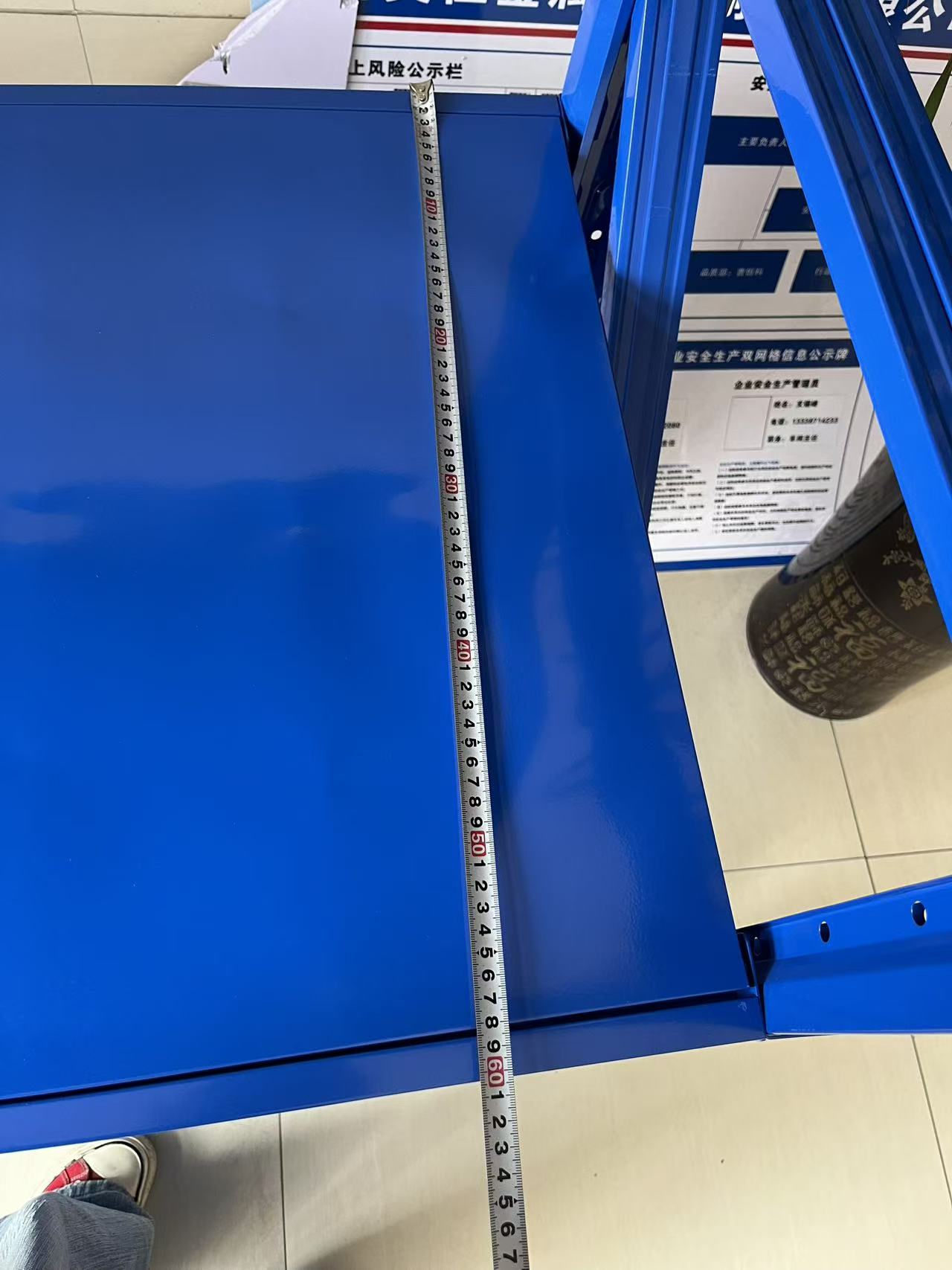
Shelf width measurement
Measuring shelf width helps verify the size of the shelf panel against the specified dimensions. Buyers should confirm the measurement reference points and whether the agreed dimension refers to the panel itself or another defined component dimension.
Shelf length measurement
Shelf length should also be checked against the agreed specification. Recording the measured value makes it easier to compare the finished component with the customer's drawing or purchase order.
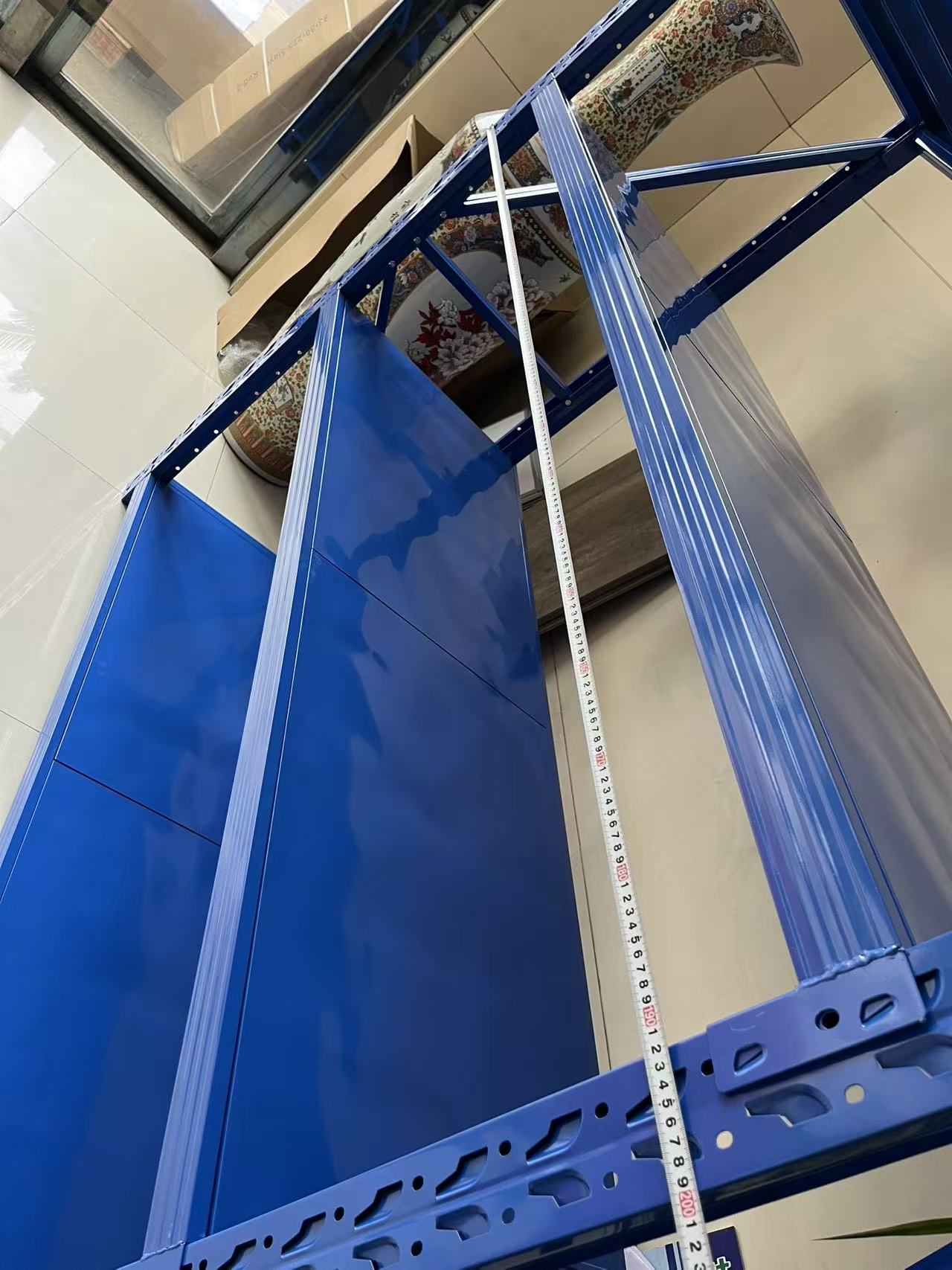
Clear photographs of dimensional checks help customers see what was measured. For formal inspection, the measuring method, reference points, tolerance, and acceptance criteria should follow the agreed specification.
4. Upright Inspection: Profile Specifications and Steel Thickness
Uprights are important structural components of warehouse shelving. Their profile and material thickness should be checked against the specification agreed for the order.
Upright profile and specification measurement
The upright profile and its specified dimensions can be measured and compared with the approved drawing or product specification. This helps buyers verify that the inspected component corresponds to the required model.
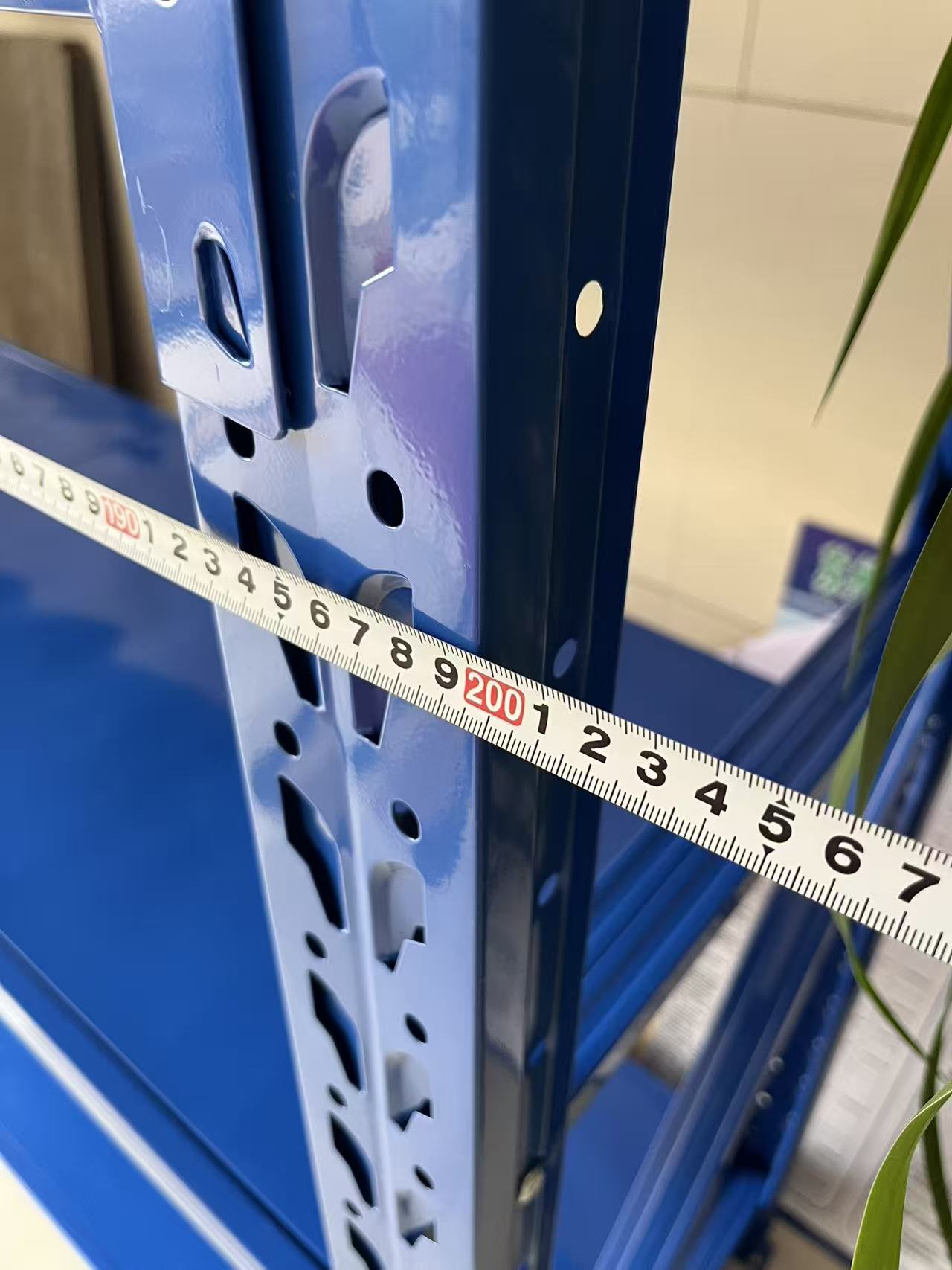
Upright steel thickness measurement
Material thickness is another inspection point. The measurement method should be suitable for the component and the material being checked. The measured result can then be compared with the agreed thickness specification.
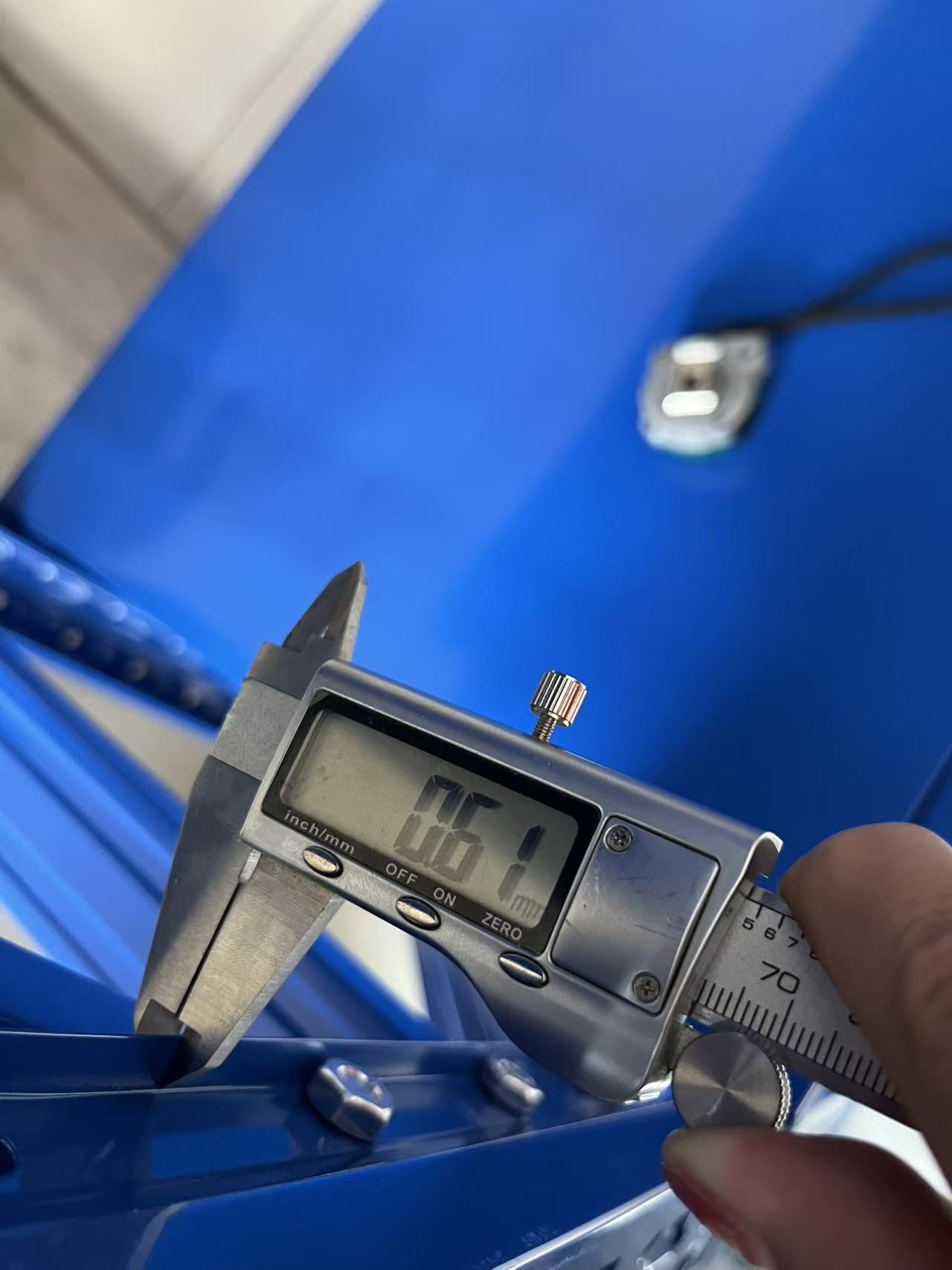
When reviewing thickness measurements, distinguish between specified base-metal thickness and any coating contribution if the measurement method includes a finished surface. For critical acceptance decisions, the measuring method and reference standard should be agreed in advance.
5. Shelf Panel Thickness Inspection
Shelf panel thickness should be checked against the product specification. A clear measurement record helps the customer review whether the inspected panel matches the agreed requirement.
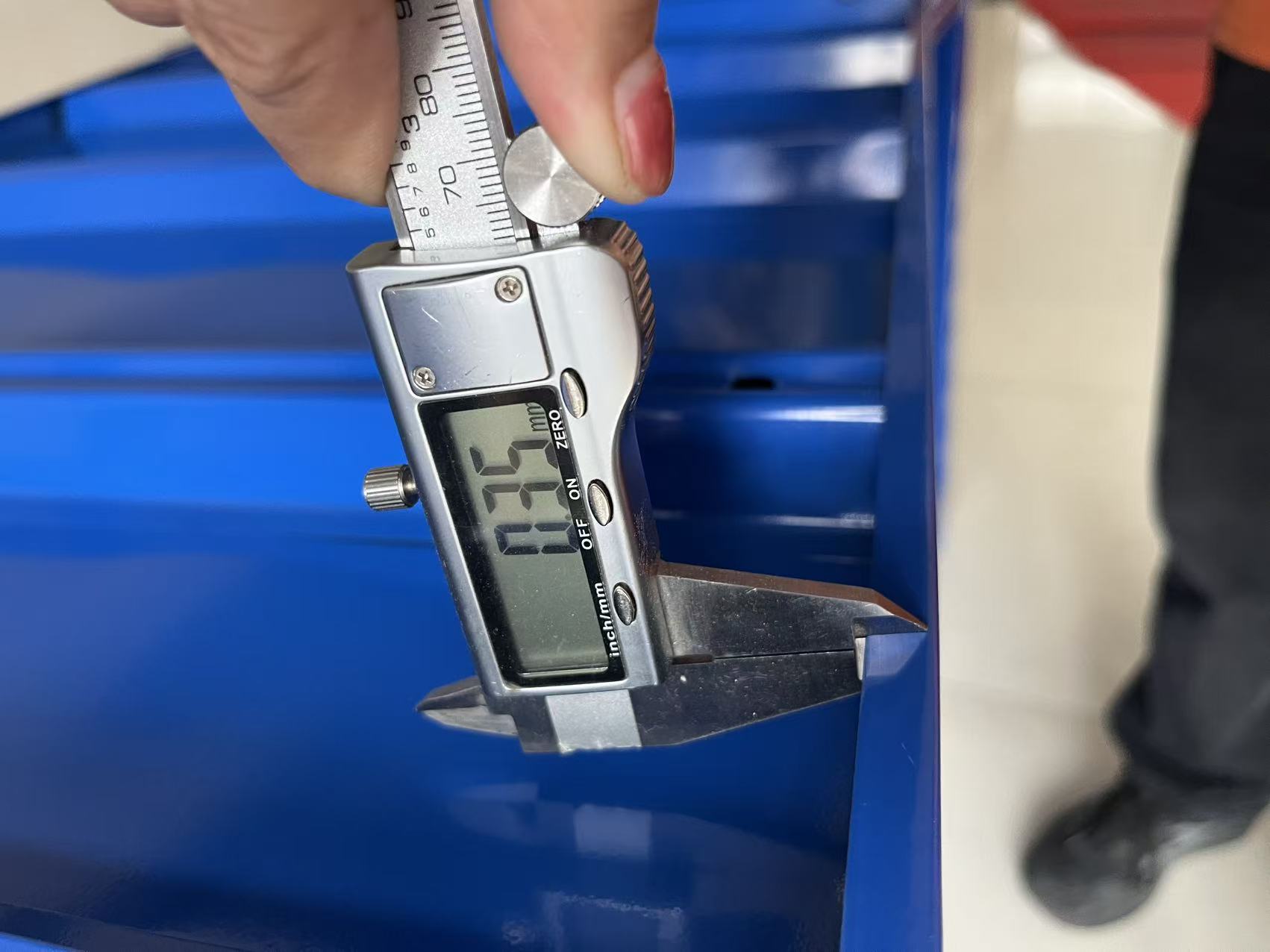
Thickness is one factor in the design and performance of a warehouse shelving component. It should not be treated as the only indicator of load capacity or overall safety. Load ratings also depend on the complete structure, material properties, component geometry, connections, and applicable design and testing requirements.
6. Third-Party Inspection at the Factory
Customers may wish to use their own inspection team or appoint an independent third-party inspection company before shipment. XINGYE supports customers who arrange on-site inspection at the factory, subject to coordination of the inspection date, order status, inspection scope, and access arrangements.
Depending on the agreed inspection plan, the inspection may cover:
- Visual review of finished warehouse shelving.
- Verification of selected dimensions against the approved specification.
- Measurement of specified steel components and shelf panel thickness.
- Review of product quantity, packaging, labels, or other agreed order details.
- Recording of findings and discussion of discrepancies identified during inspection.
To make an on-site inspection more efficient, buyers should share their inspection checklist, drawings, acceptance criteria, and any required sampling plan in advance. Inspection results and pass-or-fail decisions should be based on the agreed requirements and the inspector's actual findings.
7. Compacted-Edge Warehouse Shelves: Reducing Packing Volume
Product quality is only one part of an efficient sourcing decision. For export orders, packaging dimensions can also influence how effectively products use available container space.
XINGYE offers a compacted-edge shelf option for warehouse shelving. The edge design allows the panels to be stacked in a more compact arrangement for packing. For the referenced warehouse shelving set measuring 200 × 60 × 200 cm, the stated packing volume changes from 0.23 CBM to 0.18 CBM per set.
This represents a reduction of 0.05 CBM per set, or approximately 21.7% compared with the original stated packing volume.
How compacted-edge shelves help with packing
When shelf panels are designed to stack more compactly, the packed set can occupy less volume. This can improve container space utilization and may help buyers plan export shipments more efficiently.
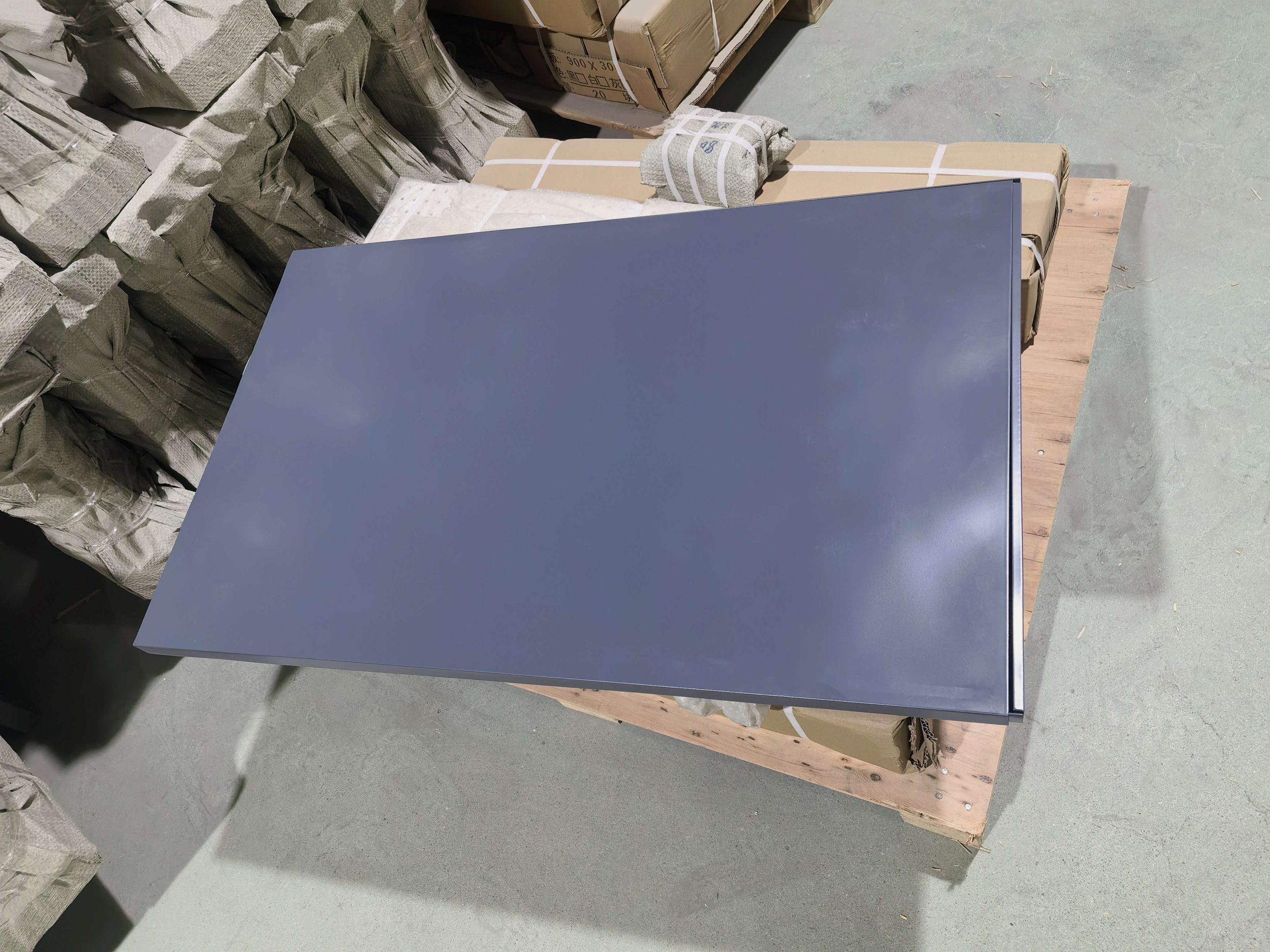
The actual benefit for a container shipment depends on the complete packing arrangement, carton dimensions, loading pattern, and container constraints. A smaller per-set packing volume does not by itself guarantee a fixed increase in the number of sets loaded.
8. What Buyers Should Confirm Before Ordering
To make quality inspection and shipment planning more straightforward, buyers should confirm the following items before production or inspection:
- Approved warehouse shelving drawings and product dimensions.
- Required upright profile and steel thickness specifications.
- Required shelf panel dimensions and thickness.
- Applicable measurement methods, tolerances, and acceptance criteria.
- Whether finished assembly inspection or third-party inspection is required.
- Inspection timing and the documents or records expected before shipment.
- Whether compacted-edge shelf panels are suitable for the project.
- Packing volume, carton dimensions, and the intended container loading plan.
Confirming these details in advance helps align the factory, the buyer, and any appointed inspector around the same requirements.
Conclusion: Making Warehouse Shelving Quality Easier to Verify
Professional manufacturing is not only about producing warehouse shelving. It is also about making product details easier for customers to verify before shipment.
Through assembled product inspection, dimensional checks, steel thickness measurements, and support for third-party inspection, XINGYE helps customers review important aspects of their warehouse shelving orders. Our compacted-edge shelf option also provides a packing-volume improvement for the referenced 200 × 60 × 200 cm set, reducing the stated volume from 0.23 CBM to 0.18 CBM.
If you are sourcing warehouse shelving for distribution, a warehouse project, or an industrial storage application, share your drawings and requirements with our team to discuss product specifications, inspection arrangements, and packaging options.
Discuss Your Warehouse Shelving Project with XINGYE
Contact Shanghai Xingye Shelf Co., Ltd. to discuss warehouse shelving specifications, pre-shipment inspection, third-party inspection coordination, and compacted-edge shelf packaging options.
Contact Our TeamFrequently Asked Questions
Can XINGYE assemble warehouse shelving for inspection before shipment?
XINGYE can support finished-product assembly and inspection arrangements according to the order requirements. The specific scope and timing should be confirmed with the team in advance.
What measurements can be checked before shipment?
Checks can include shelf width and length, upright specifications, upright thickness, and shelf panel thickness, based on the agreed product drawings and inspection requirements.
Can customers appoint a third-party inspector to visit the factory?
Yes. XINGYE supports customers who arrange third-party inspection at the factory, subject to advance coordination of the date, inspection scope, order status, and access arrangements.
How much packing volume can the compacted-edge shelf option save?
For the referenced warehouse shelving set measuring 200 × 60 × 200 cm, the stated packing volume decreases from 0.23 CBM to 0.18 CBM per set, a reduction of approximately 21.7%.
Does a lower packing volume guarantee more sets per container?
Not by itself. The actual loading quantity depends on the full packing dimensions, loading arrangement, container constraints, and other shipment requirements. A packing plan should be evaluated for the specific order.