

On September 28, 2026, a customer reported that the front-edge support-arm position on several shelf boards had a larger gap than expected, leaving the boards loose and unstable on the arms. Within 24 hours, Xingye's technical team and workshop supervisors traced the cause to a new fully automatic production line and drew up a corrective plan: 360-degree four-side inspection, manual screening of all unshipped stock, and replacement production for affected products already delivered. This article walks through each step, so buyers of supermarket shelving can see how a factory-direct manufacturer handles a quality issue in practice.
Why Customer Feedback Matters in Shelving Manufacturing
A shelving system is judged on more than appearance. Shelf boards, support arms, and uprights must fit together consistently on every order. A small variation on a shelf board's edge can loosen the connection at the support arm, even when the board looks acceptable.
For a factory-direct manufacturer, replacing the affected products is only the first step. The real work is finding the process condition behind the issue, containing every product that may share it, and changing the inspection procedure so the same problem cannot reach a customer again.
Case Overview: A Loose Fit at the Support-Arm Position
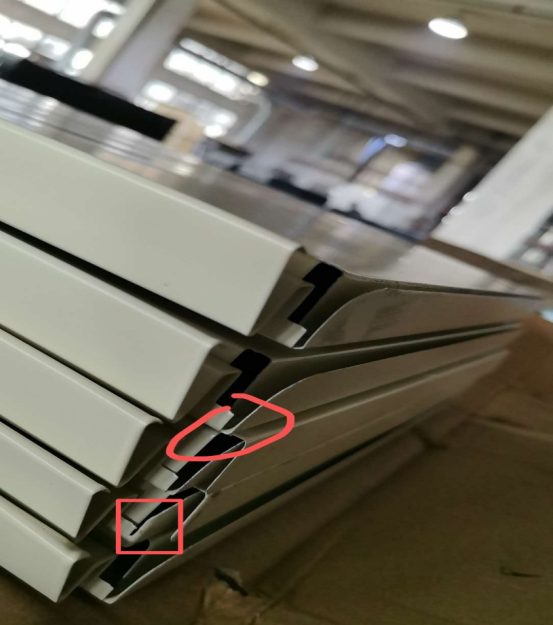
On September 28, 2026, a customer sent video feedback showing that the gap at the front-edge support-arm installation position of the shelf boards was larger than expected. As a result, the shelf board sat loosely on the support arm and was not stable.
Step 1: Response Within 24 Hours
After receiving the report, Xingye contacted its technical staff and the workshop director right away for a first-hand review of the production process. Within 24 hours, the team had traced the problem and drawn up a corrective plan.
Step 2: Root-Cause Analysis
The issue was traced to a fully automatic production line that went into service in June 2026. When a new steel coil has just been loaded and production begins, the strip can drift off its intended track. The roll-forming line operator then needs to make a timely adjustment.
Semi-finished products were already inspected, but that inspection did not cover the product's full perimeter in enough detail. As a result, pieces produced during the drift period were not caught and reached the customer.
Step 3: Upgraded Inspection for Every New Coil
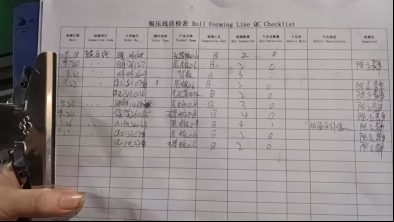
Xingye changed the inspection rule for the fully automatic line. Whenever a new coil is loaded, inspectors now check the semi-finished products on all four sides with 360-degree, no-blind-spot inspection.
- 360-degree four-side inspection of the semi-finished products coming off the line.
- The first 20 pieces must be fully acceptable before fully automatic production continues.
- Defective pieces are placed in the nonconforming-product warehouse and scrapped.
Step 4: Manual Screening of All Unshipped Stock
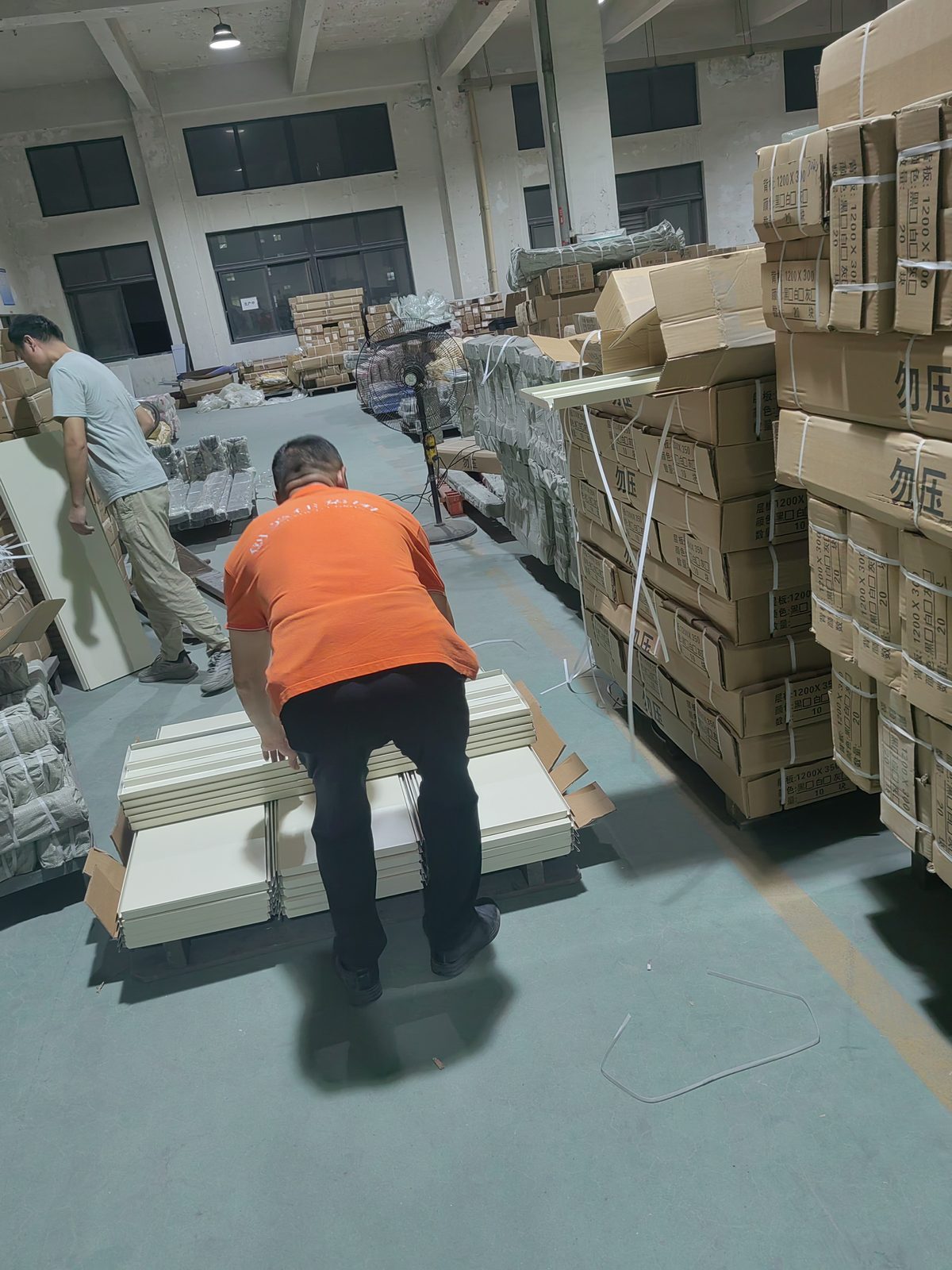
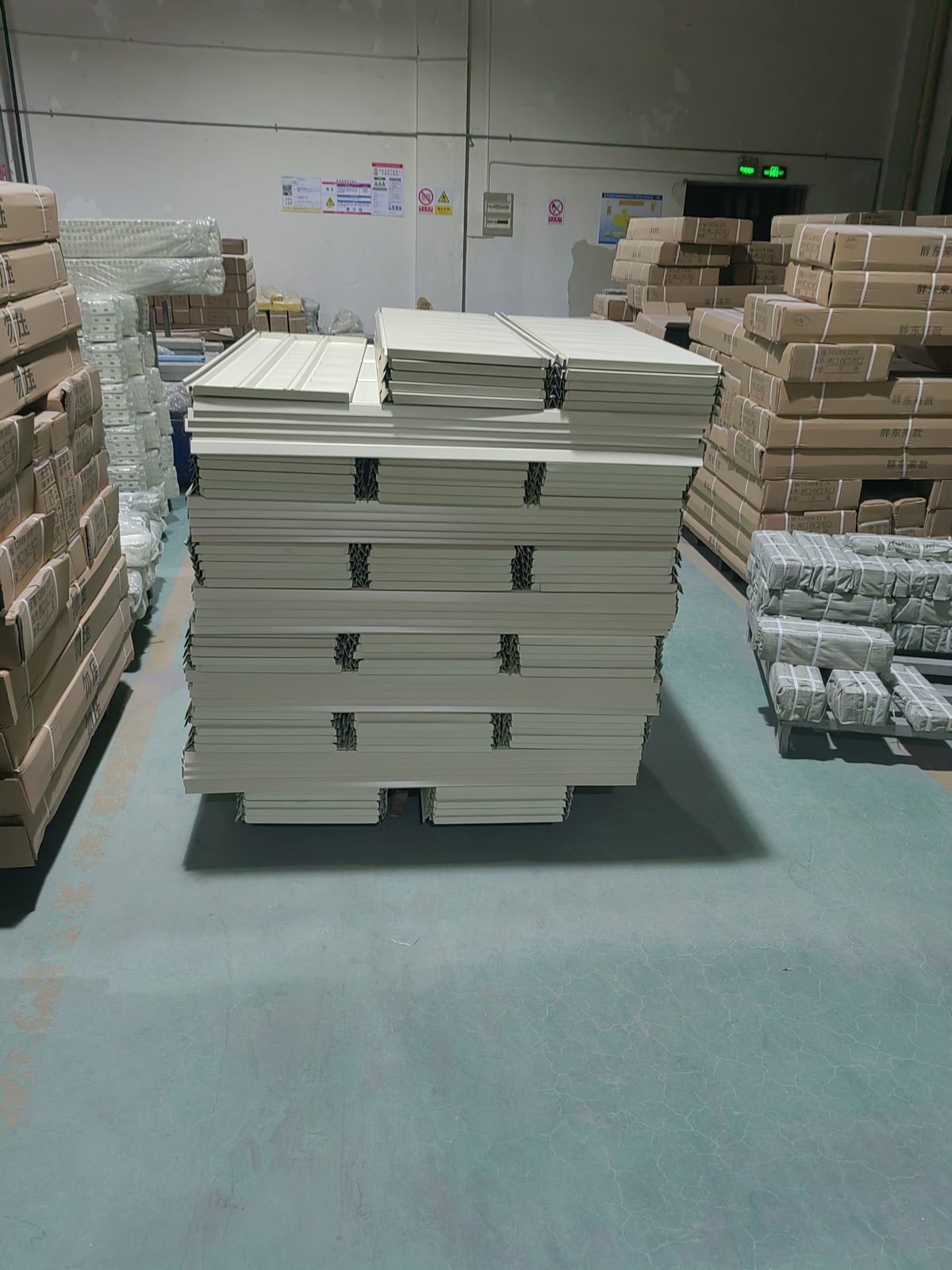
Corrective action also has to cover products that were already made but still in the factory. Xingye manually screened all unshipped products, picked out every defective piece, and sent those pieces back for re-production. The goal is that no product with this condition reaches a customer.
Step 5: Replacement for Products Already Delivered
For every product the customer had already received that showed this condition, Xingye re-produced the shelf boards and supplied them to the customer as replacements.
This matters most on retail and warehouse projects, where shelving is installed as part of a larger schedule. A loose or unstable connection can add labor and delay costs well beyond the price of the parts.
CAPA Summary: From Customer Issue to Process Improvement
CAPA (Corrective and Preventive Action) goes beyond one-time replacement. It fixes the identified problem and reduces the chance of recurrence. In this case:
| Action area | What was done | Type |
|---|---|---|
| Customer remediation | Re-produced and supplied replacements for all delivered products with this condition. | Corrective |
| Inventory containment | Manually screened all unshipped stock; defective pieces picked out and re-produced. | Corrective |
| First-piece control | 360-degree four-side inspection; the first 20 pieces must be fully acceptable before automatic production continues. | Preventive |
| Defective-product handling | Defective pieces go to the nonconforming-product warehouse and are scrapped. | Preventive |
What This Case Shows About Factory Quality Control
No quality system should depend on a single inspection point. Effective control combines process control, first-piece inspection, in-process checks, finished-product inspection, inventory containment, and customer feedback. Three lessons stand out:
- New equipment needs new inspection rules. A newly commissioned line can behave differently at start-up, so inspection has to be adapted to the equipment.
- Inspection must cover the whole product. Checking only some dimensions can miss a defect on an edge.
- Feedback is production data. Customer reports can expose conditions that factory inspection does not fully capture. Documented and traced properly, they improve manufacturing standards.
How Xingye Approaches Quality Control
Shanghai Xingye Shelf Co., Ltd. combines process control with stage-by-stage inspection for supermarket shelving, gondola shelving, and related retail shelving systems:
- Raw material control before production
- Process inspection during fabrication, including first-piece checks on the automatic line
- Dimensional checks for critical components
- Surface treatment and powder-coating control
- Finished-product inspection before packing
- Packaging inspection before shipment
- Customer feedback and corrective-action review when required
Six Questions to Ask Any Shelving Supplier About Quality Problems
Price and capacity are not the only factors when evaluating a supplier. Distributors, supermarket chains, and project buyers placing repeat or large orders should also ask how the factory handles problems when they occur:
- How is a customer complaint recorded?
- How quickly is the production team involved?
- Can the factory trace the affected production batch?
- Can potentially affected inventory be isolated?
- Is there a defined corrective-action process?
- Does customer feedback lead to an actual process change?
This case answers each of these with a specific action rather than a general promise.
Supermarket Shelving Quality Control FAQ
What should a supermarket shelving manufacturer inspect?
Raw materials, dimensions, fabrication, surface treatment, finished products, and packaging. The exact checkpoints depend on the shelving structure and manufacturing process.
Why is first-piece inspection important in shelving production?
It catches production deviations at the start of a batch or after a material change, before a large quantity is made. At Xingye, the first 20 pieces from each new coil on the fully automatic line must be fully acceptable before automatic production continues.
What is CAPA in manufacturing quality control?
CAPA stands for Corrective and Preventive Action. It combines actions that correct an identified problem with measures that reduce the chance of it happening again.
What happens to defective products found during inspection?
At Xingye, products that fail inspection are placed in the nonconforming-product warehouse and scrapped. Unshipped stock affected by an identified issue is manually screened, and defective pieces are re-produced so they do not reach customers.
How should a factory handle a customer quality complaint?
A structured response covers complaint documentation, root-cause tracing, containment of affected inventory, customer remediation, and corrective or preventive action where needed.
Related Xingye Quality and Manufacturing Resources
Looking for a factory-direct supplier for supermarket or retail shelving?
Send your product requirements, quantities, dimensions, destination, and project schedule to Shanghai Xingye Shelf Co., Ltd. Our team will help you evaluate the right shelving solution and manufacturing requirements.