

How to Test Supermarket Shelf Load Capacity: A 90kg Static Load Case Study
Shelf load capacity is an important factor when selecting supermarket shelving. Buyers need to understand not only the stated load capacity, but also how the shelf structure, steel thickness, reinforcement and load distribution affect performance.
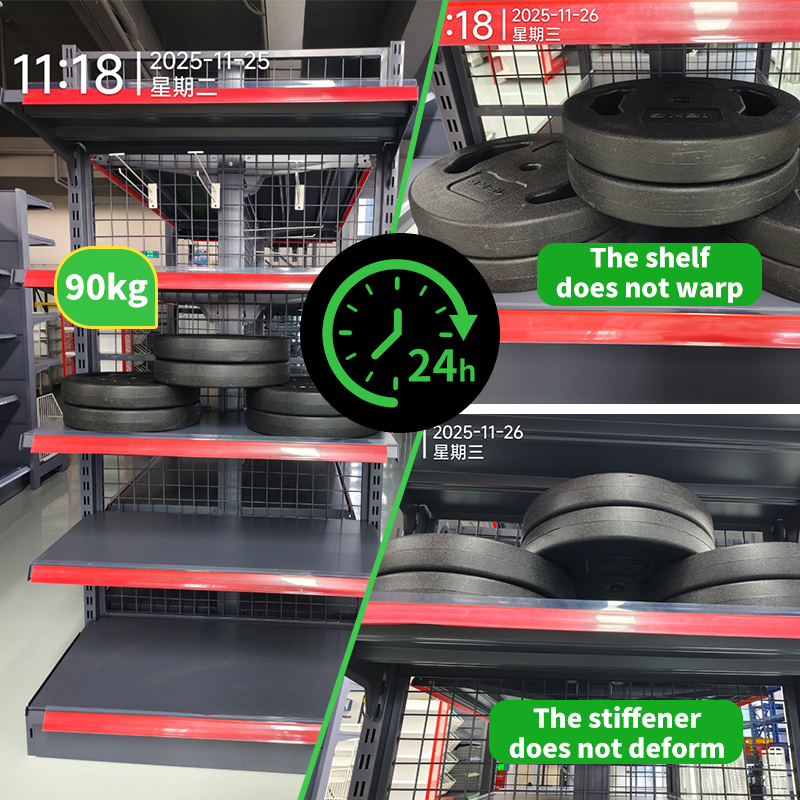
In this article, Shanghai Xingye Shelf Co., Ltd. presents an actual static load test of a grid supermarket shelf. The test placed an evenly distributed 90kg load on one individual shelf level for 24 hours. After the load was removed, no visible deformation was observed.
1. Understand the Structure Before Testing
A supermarket shelving system consists of multiple structural components. The shelf panel, grid structure, upright posts, brackets and base board work together to support merchandise.
Before conducting a load test, it is important to identify the tested configuration and confirm the dimensions and material thickness of its main components.
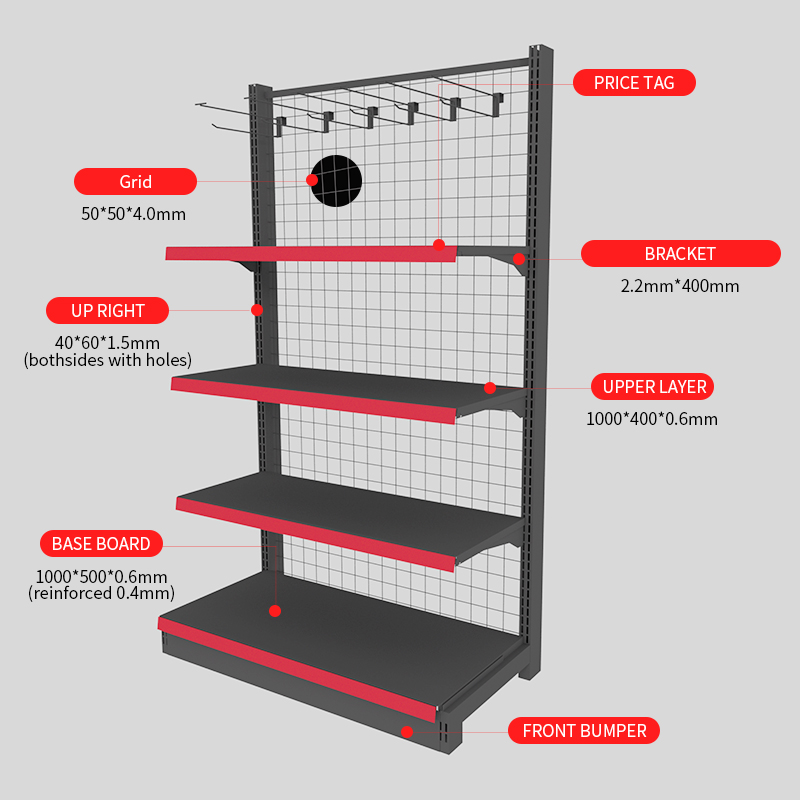
Test Sample Specifications
| Component | Specification |
|---|---|
| Grid panel | 50 × 50 × 4.0 mm |
| Upright post | 40 × 60 × 1.5 mm |
| Bracket | 2.2 mm thickness × 400 mm length |
| Upper shelf board | 1000 × 400 × 0.6 mm |
| Base board | 1000 × 500 × 0.6 mm |
| Base board reinforcement | Additional 0.4 mm reinforcement |
These specifications describe the tested sample configuration. Different shelf sizes, materials and structural designs may have different load performance.
2. Check the Grid Wire Diameter
For grid shelving, wire diameter is one of the structural details worth checking. It helps buyers verify whether the supplied grid panel matches the agreed product specification.
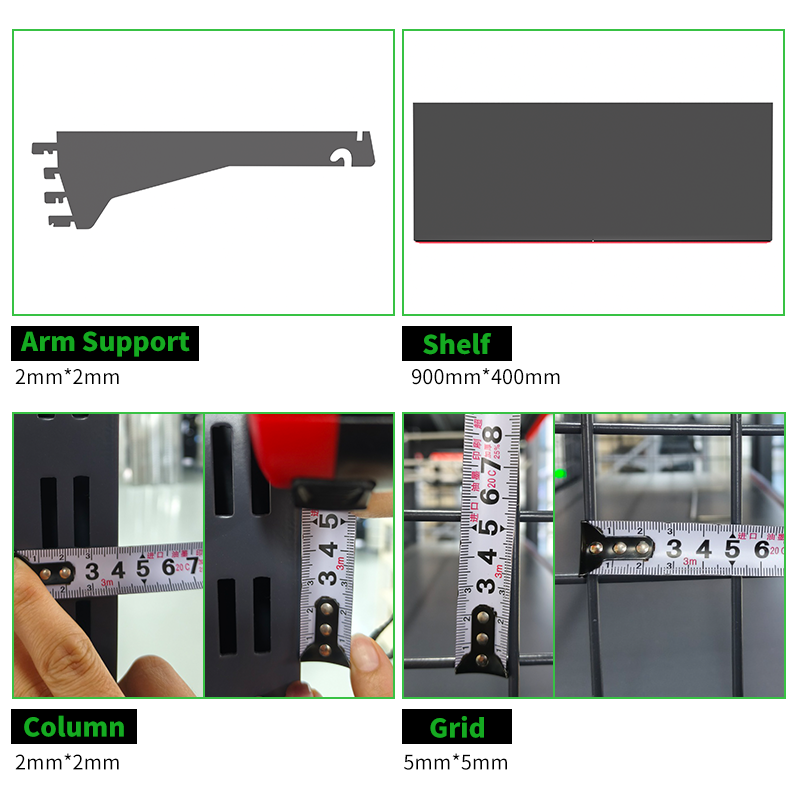
Buyers can request measurement photos or inspection records to confirm material dimensions before production approval or shipment.
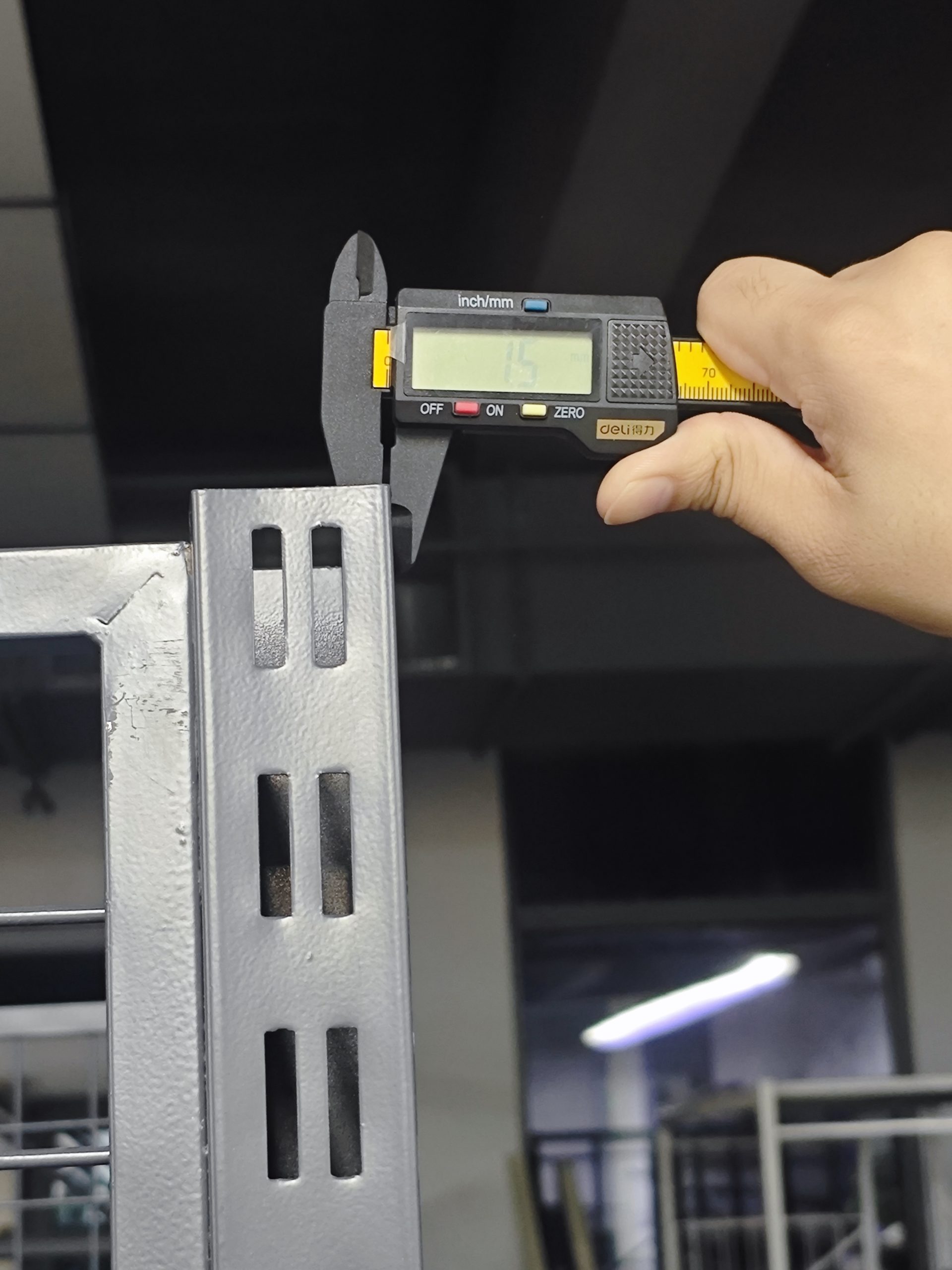
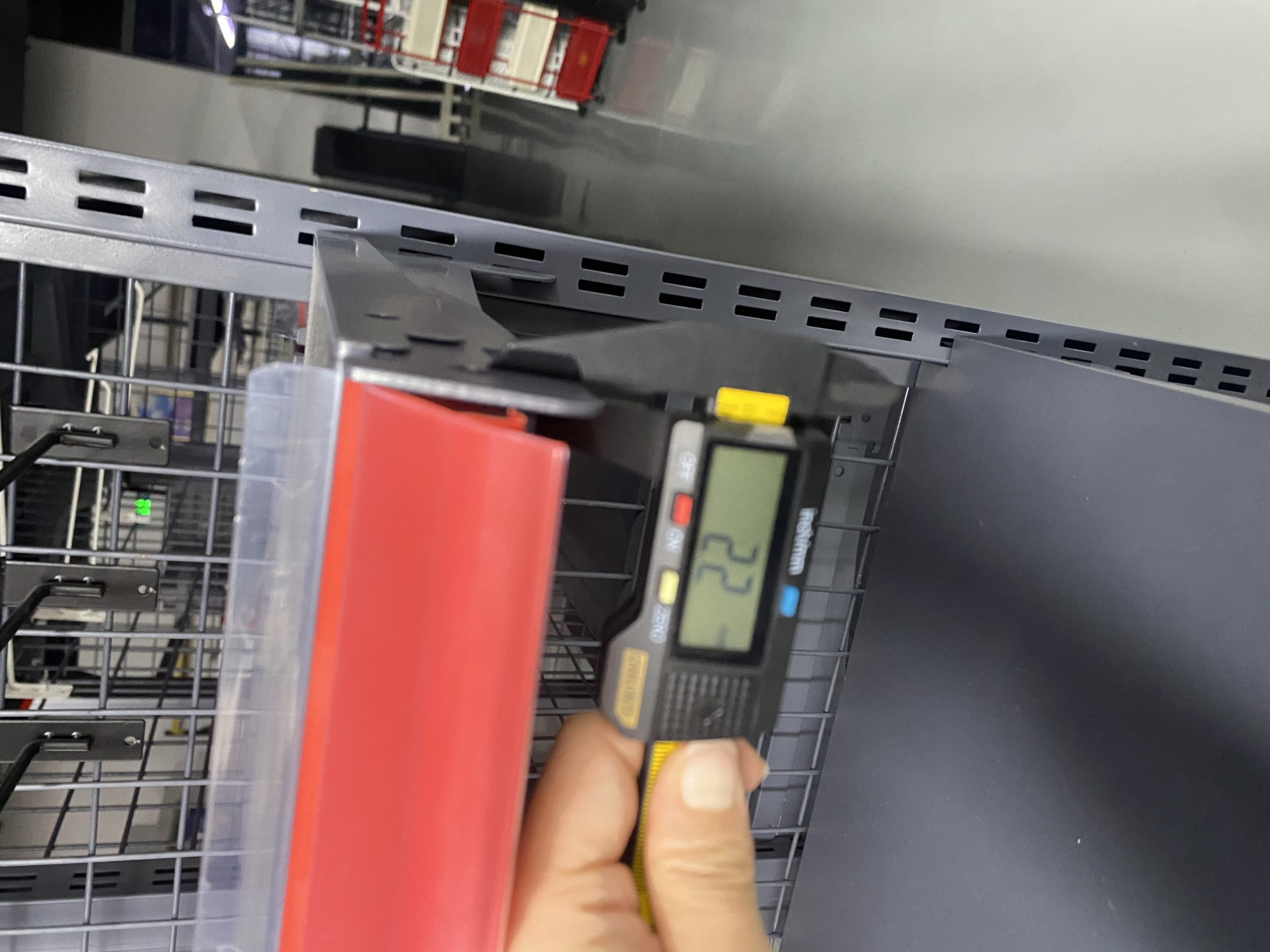
3. Verify the Steel Thickness of Key Components
Steel thickness is another important specification to verify. Measurements should be taken on the relevant component and compared with the agreed technical drawing or purchase specification.
Upright Post Thickness
Shelf Panel Thickness
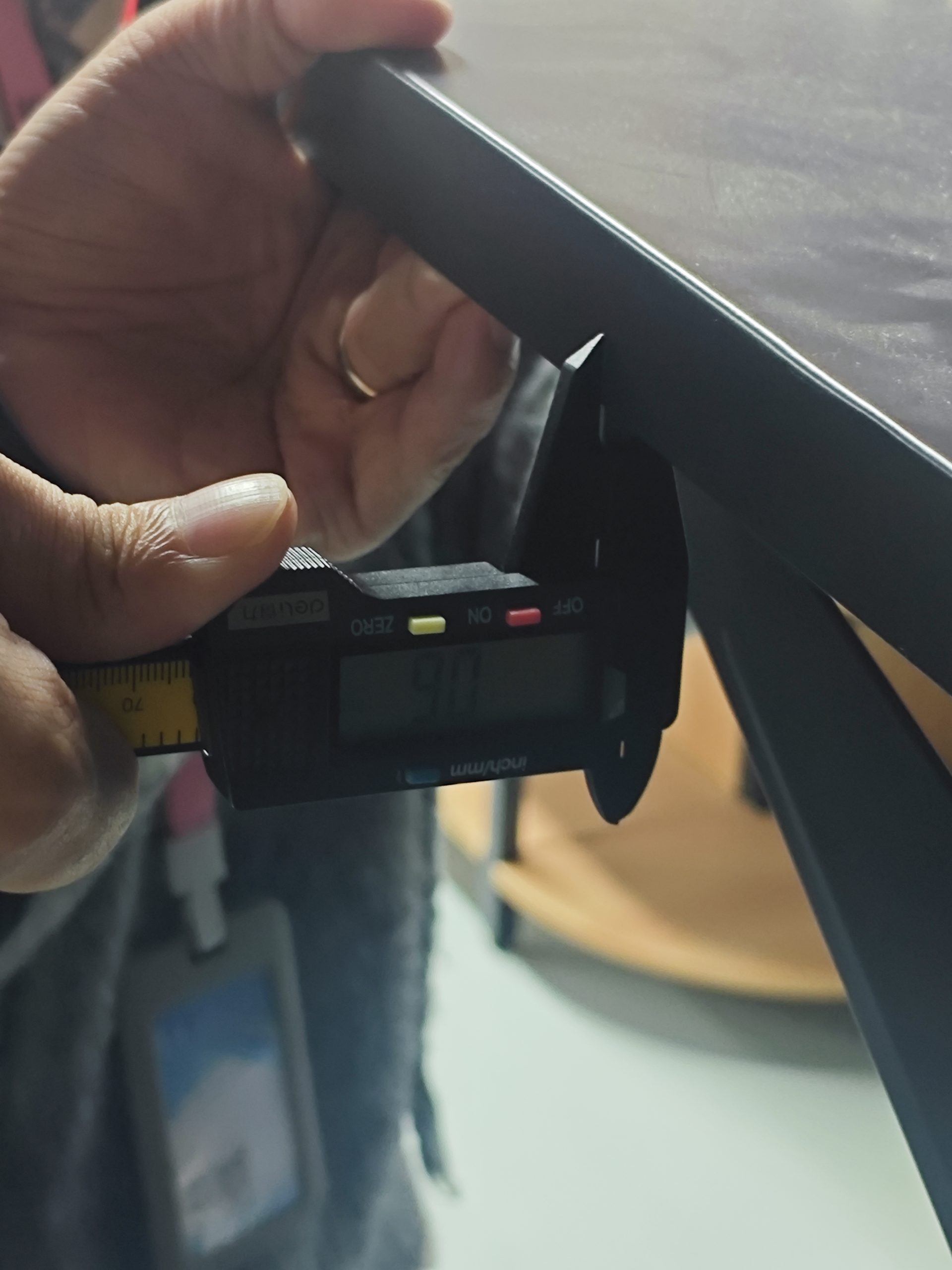
Bracket Thickness
4. How the 90kg Static Load Test Was Conducted
The purpose of this test was to observe the performance of one individual grid shelf level under a sustained, evenly distributed static load.
Test Conditions
| Test item | One individual grid shelf level |
|---|---|
| Applied load | 90 kg |
| Load distribution | Evenly distributed across the shelf |
| Duration | 24 hours |
| Observation after unloading | No visible deformation observed |
Step 1: Prepare the Shelf
Assemble the tested shelf according to its intended configuration. Check that the shelf panel, brackets and upright posts are properly connected before applying the load.
Step 2: Apply the Load Evenly
Place the 90kg test load evenly across the shelf surface. An evenly distributed load is important because it allows the test to observe the shelf's response under a consistent loading condition.
Step 3: Maintain the Load for 24 Hours
Keep the load on the shelf for 24 hours. The test focuses on the shelf's ability to maintain its structure during the specified loading period.
Step 4: Remove the Load and Inspect
After 24 hours, remove the load and visually inspect the tested shelf. In this test, no visible deformation was observed after unloading.
5. What Buyers Should Check When Evaluating Shelf Load Capacity
A load capacity claim should be evaluated together with the product configuration and test conditions. Buyers should not compare load figures without checking whether the test conditions are the same.
- Test object: Confirm whether the stated load applies to one shelf level, the entire shelving unit or another component.
- Load distribution: Check whether the load is evenly distributed or concentrated at a specific point.
- Test duration: Ask how long the load was maintained.
- Material specifications: Verify the steel thickness, component dimensions and reinforcement details.
- Post-test inspection: Ask whether the shelf was checked after unloading and whether any deformation was observed.
- Product configuration: Confirm that the test sample matches the model, dimensions and structure being purchased.
6. Frequently Asked Questions
Q1: What does a 90kg shelf load test mean?
In this case study, 90kg refers to the static load applied evenly across one individual shelf level. It does not refer to the total load capacity of the entire shelving unit.
Q2: How long was the XINGYE grid shelf tested?
The tested shelf remained under the evenly distributed 90kg static load for 24 hours.
Q3: Was any deformation observed after the test?
No visible deformation was observed on the tested shelf after the load was removed.
Q4: Does this test result apply to all supermarket shelving models?
No. Load performance depends on the shelf dimensions, material thickness, bracket design, reinforcement and overall configuration. This result applies only to the tested sample and its stated conditions.
Q5: What information should buyers request from a shelving supplier?
Buyers should request product drawings, component dimensions, material thickness information, load test conditions and relevant inspection evidence. The test sample should match the product configuration being quoted.
Conclusion
Evaluating supermarket shelf load capacity involves more than looking at a single weight figure. Buyers should consider the tested shelf configuration, material dimensions, load distribution, test duration and inspection results after unloading.
In this XINGYE grid shelving case study, one individual shelf level supported an evenly distributed 90kg static load for 24 hours, with no visible deformation observed after unloading. This provides documented evidence of the tested sample's performance under the stated conditions.
Looking for Supermarket Shelving for Your Project?
Shanghai Xingye Shelf Co., Ltd. provides gondola shelving, grid shelving, retail display shelving and customized store fixture solutions. Contact our team to discuss your store layout, product dimensions and project requirements.
Contact XINGYE