
Supermarket Shelving Load Capacity Explained: Structure, Steel Thickness & Weight Limits
Supermarket shelving load capacity is determined by more than the thickness of a shelf board. The upright structure, brackets, shelf dimensions, reinforcement, steel specification and load distribution all affect how much weight a retail shelving system can safely support.
For retailers, distributors and supermarket project buyers, understanding these factors is essential when selecting shelving for grocery stores, convenience stores, pharmacies and other retail environments.
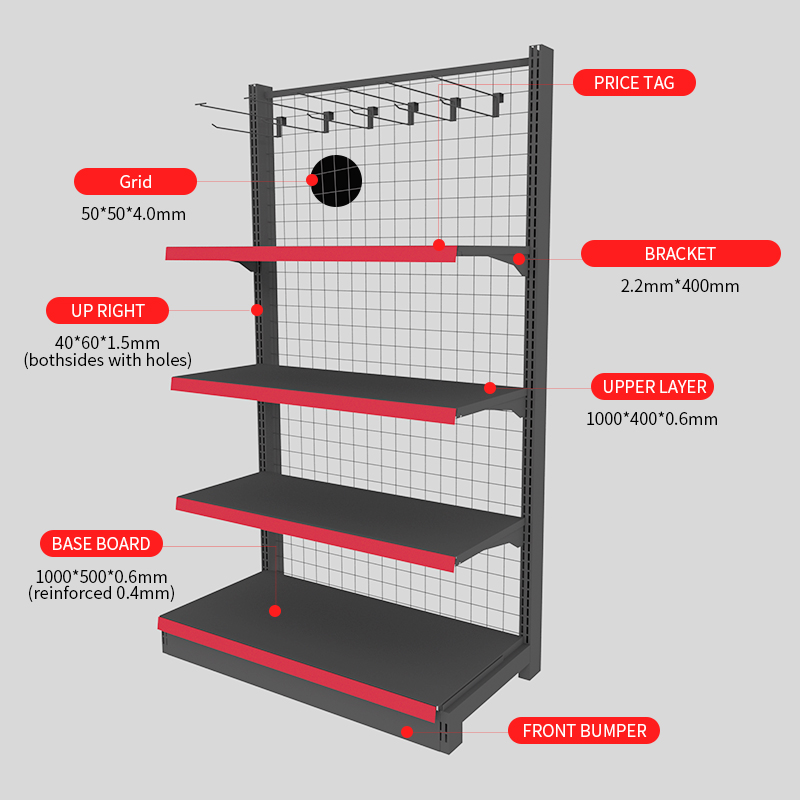
What Determines Supermarket Shelving Load Capacity?
The load capacity of supermarket shelving depends on the complete shelving configuration rather than one individual component. A shelf with thicker steel may not automatically have a higher load rating if the brackets, uprights or overall structure are not designed for the same application.
1. Steel Thickness
Steel thickness affects the strength and stiffness of shelf boards, brackets and structural components. The appropriate thickness should be selected according to shelf dimensions, expected product weight and the intended retail application.
2. Upright Structure
The upright is one of the main load-bearing components of a gondola shelving system. Its profile, material thickness, height and connection design influence the stability of the complete shelving unit.
3. Bracket Design
Brackets transfer the load from the shelf board to the upright. Bracket thickness, shape, connection method and shelf depth all affect the performance of the shelving system.
4. Shelf Size and Depth
Shelf dimensions influence how weight is distributed across the structure. Deeper shelves may require appropriate reinforcement and bracket configurations for heavier products.
5. Load Distribution
A uniformly distributed load is generally different from a concentrated load placed in one small area. Retail shelving should therefore be evaluated according to the actual way products will be stored and displayed.
6. Reinforcement Design
Reinforced shelf boards, stiffeners, stronger brackets and other structural elements can improve the stability and load-bearing performance of a shelving system when properly engineered together.
Understanding the Main Components of a Supermarket Shelf
A supermarket gondola shelving system is made from several interconnected components. Each component has a different structural function, and the final load capacity depends on how these components work together.
- Upright: supports the main vertical structure of the shelving system.
- Bracket: connects and supports the shelf board while transferring weight to the upright.
- Shelf board: directly supports the products displayed on each level.
- Base board: provides a lower display level and contributes to the stability of the shelving unit.
- Back panel: helps stabilize the shelving structure and provides a finished display background.
- Reinforcement: additional structural components can be used for applications requiring higher capacity.
Key Point for Buyers
When comparing supermarket shelving suppliers, do not compare steel thickness alone. Ask the supplier for the complete shelving configuration, shelf dimensions, bracket specification and tested load capacity.
Supermarket Shelf Load Capacity: Why Configuration Matters
Different supermarket shelves can have different load capacities even when they appear visually similar. For example, a standard grocery shelf designed for packaged food may require a different configuration from a heavy-duty shelf designed for beverages, bulk products or warehouse-style retail applications.
The actual load rating should therefore be determined based on the specific shelf width, depth, steel thickness, bracket type, upright structure and reinforcement design.
Important: Load capacity figures should not be treated as universal values for every supermarket shelving system. Actual capacity depends on the complete product configuration, installation conditions and load distribution.
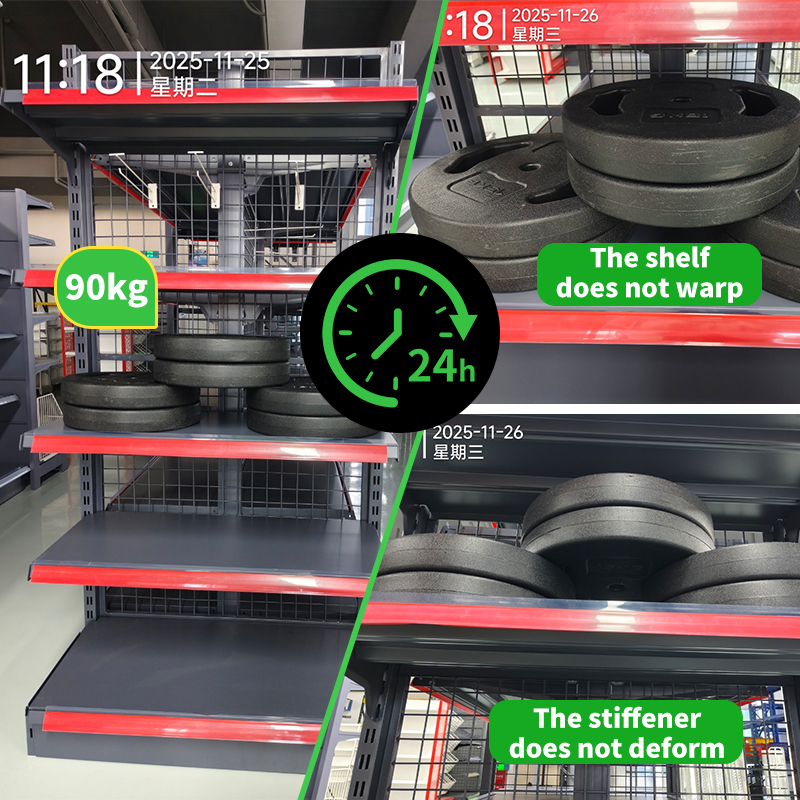
How Is Supermarket Shelving Load Capacity Tested?
A proper load test should reflect the actual configuration of the shelving system. The test should consider the shelf width, depth, bracket type, steel thickness and the way the load is distributed across the shelf.
For example, a shelf loaded evenly across its surface is different from a shelf carrying a concentrated weight in the center. Testing should therefore be performed under clearly defined conditions so buyers can understand what the stated load capacity actually represents.
What Buyers Should Ask a Shelving Supplier
- What is the tested load capacity per shelf layer?
- Is the load capacity based on evenly distributed loading?
- What steel thickness is used for the shelf board?
- What bracket specification is being used?
- What is the shelf width and depth used during testing?
- Is reinforcement included in the tested configuration?
- Can the supplier provide product drawings or technical specifications?
What Shelf Load Capacity Do You Need?
The correct shelving specification depends on the products that will be displayed. Retailers should first estimate the maximum expected product weight per shelf and then select an appropriate shelving configuration.
Light-Duty Retail Shelving
Suitable for lightweight packaged goods, small retail products, accessories and other products where extreme load capacity is not required.
Standard Supermarket Shelving
Commonly used for packaged food, household products, grocery items and general supermarket merchandise. The shelving configuration should be selected according to product weight and shelf dimensions.
Heavy-Duty Retail Shelving
For beverages, bulk products, heavier packaged goods and applications requiring higher load capacity, reinforced shelf boards, stronger brackets and suitable structural components may be required.
How Steel Thickness Affects Shelf Strength
Steel thickness is one of the important factors affecting shelf stiffness and structural performance. However, increasing thickness alone does not guarantee a specific load capacity.
The final performance also depends on the shelf profile, reinforcement, bracket structure, shelf depth, upright design and connection method.
For this reason, professional shelving manufacturers normally select the steel specification together with the complete structural design rather than using thickness as the only performance indicator.
How to Choose the Right Supermarket Shelving Load Capacity
Before purchasing supermarket shelving, buyers should provide the supplier with basic information about the planned store and products. This allows the manufacturer to recommend a suitable shelving configuration.
- Store type: supermarket, grocery store, convenience store, pharmacy or retail chain
- Shelf width and depth requirements
- Approximate product weight per shelf
- Required number of shelf levels
- Single-sided or double-sided gondola shelving
- Standard or heavy-duty application
- Required colors, accessories and customization
Why Work With an Experienced Shelving Manufacturer?
Choosing a shelving supplier with manufacturing and engineering experience can make it easier to match the shelving structure with the actual requirements of a retail project.
Shanghai Xingye Shelf Co., Ltd. has more than 30 years of manufacturing experience and provides supermarket shelving, gondola shelving systems, wall shelving, retail display solutions and custom OEM & ODM services.
For customized retail projects, XINGYE can support product specifications, CAD store layout design, 3D store planning and factory-direct production according to project requirements.
Related Supermarket Shelving Guides
- Steel Thickness & Material Guide
- Supermarket Shelving Buying Guide
- Supermarket Shelving Pricing Guide
- Retail Shelving Technical Guide
- Supermarket Shelving Installation Guide
Frequently Asked Questions About Supermarket Shelving Load Capacity
1. How much weight can a supermarket shelf hold?
The load capacity depends on the complete shelving configuration, including steel thickness, shelf size, bracket design, upright structure, reinforcement and load distribution. A supplier should provide the load capacity for the specific configuration being purchased.
2. Does thicker steel always mean a stronger shelf?
Not necessarily. Steel thickness is important, but shelf profile, bracket design, reinforcement, dimensions and the complete shelving structure also affect load capacity.
3. What is evenly distributed load?
Evenly distributed load means the weight is spread relatively evenly across the shelf surface rather than concentrated in one small area. Load testing should clearly specify the loading method.
4. Can supermarket shelving be customized for heavier products?
Yes. A professional manufacturer can customize shelf dimensions, steel specifications, brackets, reinforcement and other structural components according to the required application.
5. How do I choose the correct shelf load capacity?
Start by determining the maximum product weight per shelf, shelf width and depth, number of shelf levels and the type of products being displayed. The manufacturer can then recommend an appropriate configuration.
Need Supermarket Shelving With the Right Load Capacity?
Tell us your shelf dimensions, product weight and store requirements. Shanghai Xingye Shelf Co., Ltd. can recommend a suitable shelving structure and provide factory-direct pricing and customized retail shelving solutions.
Request a Factory Quote